
Airborne Mold in the Food Industry: A Common Risk with Serious Consequences
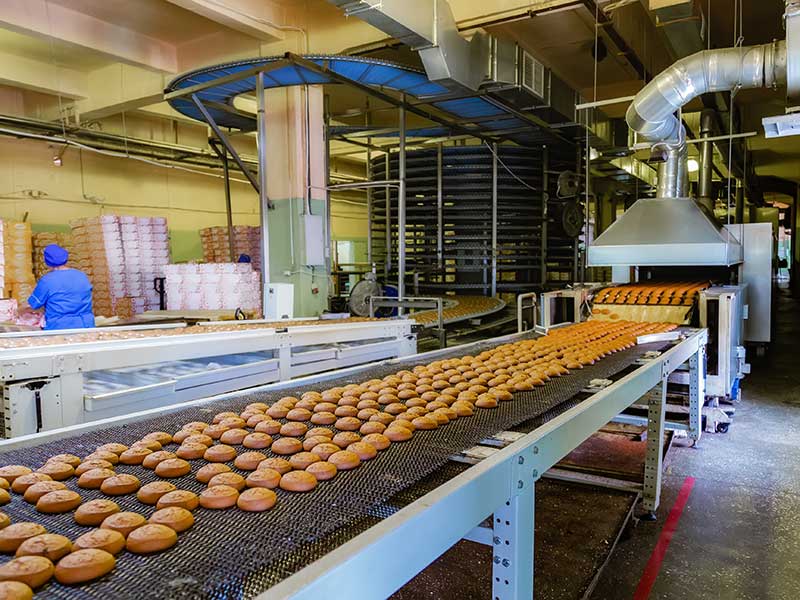
Bakeries, cheese factories, and meat processing plants are all too familiar with the problem of airborne mold in the food industry. These microorganisms contaminate food, rendering it unfit for consumption. The result: financial losses for the company and a somewhat tarnished brand image…
Fortunately, there are solutions to prevent this type of contamination. Photoclean, a specialist in UV air decontamination, explains everything.
What is mold?
This term refers to a microorganism belonging to the fungus family and classified as a “saprophyte,” meaning it requires a host to survive. It develops from spores, which are invisible to the naked eye and found on a wide variety of surfaces. When conditions are favorable, these spores multiply rapidly, invading the foodstuffs on which they are found and causing them to spoil.
The presence of mold in food industry facilities is facilitated by the conditions found there: a stable temperature between 5 and 25 °C, high humidity, and multiple sources of food for the fungus.
The Consequences of Mold Growth in the Food Industry
Mold growth on food poses a real problem for the food industry. These microorganisms alter the appearance, smell, and taste of products, ultimately rendering them unfit for consumption.
Furthermore, mold has the distinct characteristic of growing very quickly, not only on the product but also throughout the entire environment. The lightness of the spores also allows them to settle on all surfaces very rapidly. Controlling this contamination from the outset is therefore absolutely essential.
Preventing and Controlling Airborne Mold in Food Industry Facilities
The ideal solution would be to prevent spores from forming by adjusting temperature and humidity levels in production facilities. Unfortunately, this is usually impossible, as the storage and processing of products require specific environmental conditions. Even in cases where modifying these parameters is theoretically possible, the cost and environmental impact automatically rule out this option.
The industry has therefore traditionally relied on various techniques to eliminate mold:
- hygiene of facilities, equipment, and personnel;
- disinfection of surfaces via airborne methods;
- decontamination through fumigation or misting;
- use of HEPA filters.
While the first solution remains essential, it is not enough to prevent mold growth in food industry facilities. Air disinfection processes are effective, but they have two drawbacks: they must be carried out when employees are not present, and as soon as employees return to the premises, the risk of contamination reemerges.
HEPA filters are an effective solution for air decontamination. However, the equipment is expensive to purchase, bulky, and extremely energy-intensive.
So what solution remains for combating mold in the food industry? Photoclean products: an innovative concept based on the action of UV-C rays, which continuously destroy unwanted microorganisms, even in very large air volumes, thanks to a technology that combines UV rays with a medium developed and manufactured exclusively by PhotoClean at its production facilities in the Lyon region. Discover our custom-designed, compact, and energy-efficient modules for industrial air treatment today. Our engineering department is here to assist you in scheduling an audit of your facilities so we can propose a customized solution.