

Dust, VOCs, Microorganisms: How to Disinfect in the Food Industry?
Disinfection in the food industry is a constant challenge for those in the sector. Faced with multiple contamination risks, how can the food industry effectively disinfect its facilities? Solutions do exist, but they are often incomplete, costly, or restrictive. PhotoClean presents its solution to contamination in industrial settings.
What types of pollutants are found in a food industry plant?
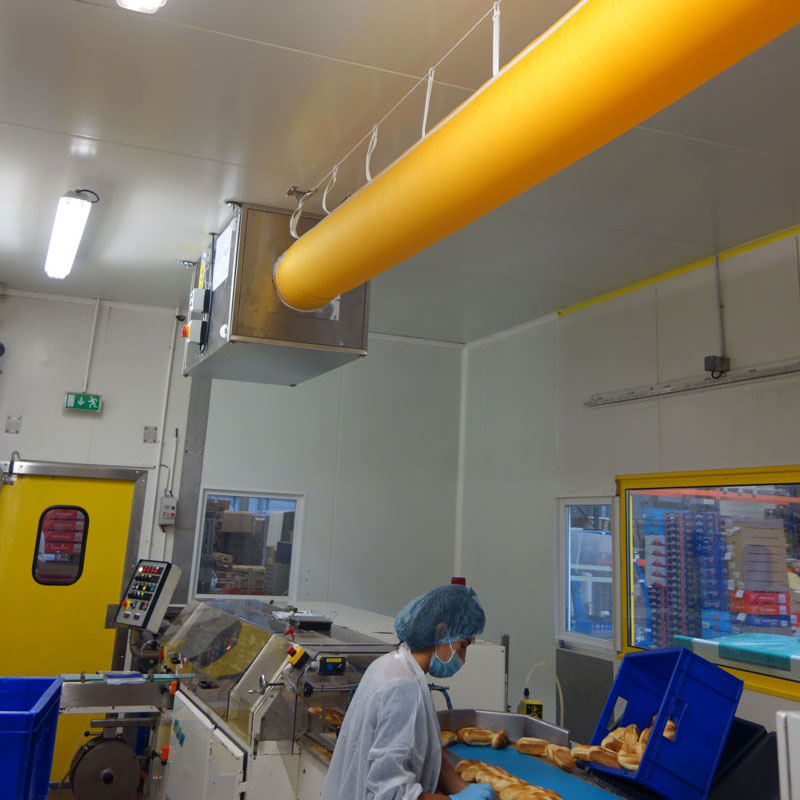
The air in production, processing, or packaging facilities may contain various contaminants, including:
- physical particles: dust, debris, organic matter;
- microorganisms: bacteria, viruses, mold, spores, yeast;
- allergens;
- chemical residues from raw materials;
- contaminants related to human activity or facilities.
What is cross-contamination in the food industry?
This term refers to the unintentional transfer of contaminants from one area, product, or material to another, resulting in accidental pollution.
The sources of contamination vary widely. The risks stem primarily from:
- from staff through breathing, movement, clothing, or improperly followed hygiene protocols;
- from ambient air, which carries particles and microorganisms;
- moist surfaces, which promote microbial growth and cause germs to become airborne in the form of microdroplets.
What is the impact of airborne contamination in the food industry?
Air contamination is often underestimated. Yet, in production facilities, it serves as an ideal vector for the spread of pollutants. Surface disinfection alone is not sufficient to eliminate contaminants and ensure the food safety of products.
Particulate and microbiological disinfection of industrial air is a reliable method for supplementing surface cleaning.
What is the best way to ensure food safety in facilities of the food industry?
Disinfection systems that use misting or fumigation are commonly used to reduce the microbial load in sensitive environments.
However, these systems have technical limitations, particularly in very humid environments or those that are difficult to ventilate. Furthermore, they require operations to be suspended because they are incompatible with human presence.
As for conventional air-treatment equipment, it is ill-suited for the food industry because it is ineffective in cold, humid, or high-particle-count environments.
So, how can food industry facilities be effectively decontaminated? Until now, no air-treatment system had been specifically designed for these environments.
The existing systems were unable to handle humidity, particulates, microorganisms, and allergens all at once.
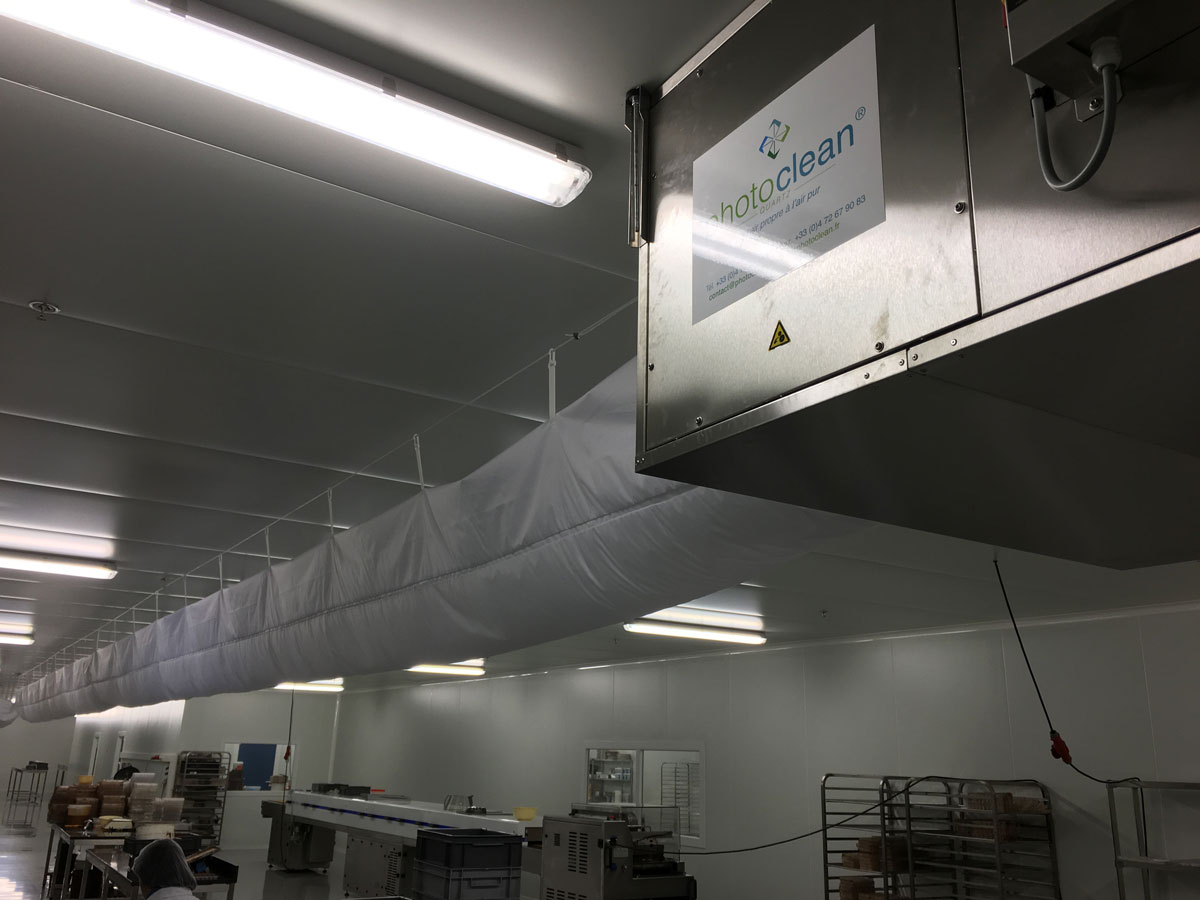
Photoclean has therefore developed an innovative solution to address a critical need for manufacturers: UV disinfection of the air.
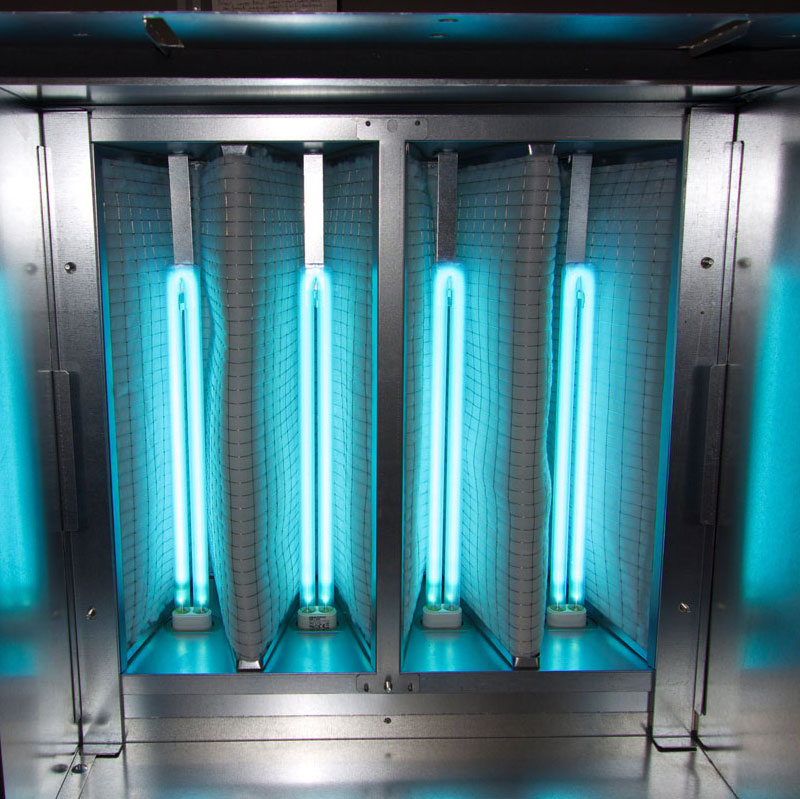
Our systems are designed to treat air in food-processing environments continuously and without pressure drop. UV-C rays, combined with a medium that enhances their effects, are capable of capturing and eliminating airborne microorganisms and contaminants, as well as particles, thanks to the integrated pre-filters and filters.
Our industrial air-handling units are compact, energy-efficient, environmentally friendly, and easy to maintain. They are manufactured entirely in France and can be installed as standalone units or integrated into an existing air-handling system.