

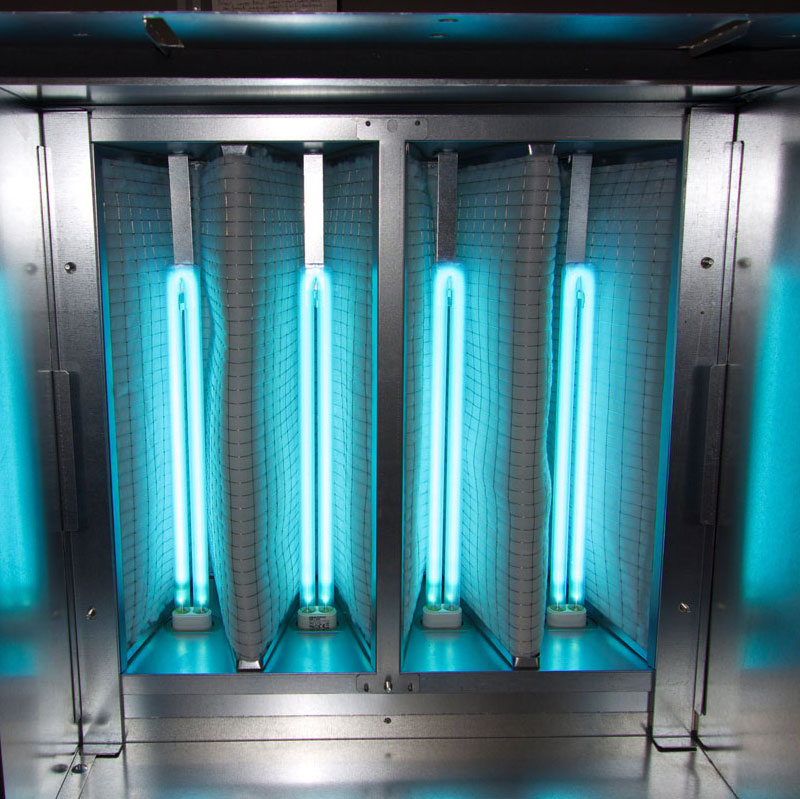
What is UVC disinfection, and what are its benefits for industry?
This technology uses UVC rays to neutralize microorganisms present in the air, in water, or on surfaces. It is a clean and effective method that, among other things, eliminates pathogens in food industry facilities. What exactly is UVC disinfection, and how does it work?
Why use only UVC radiation?
There are three types of UV rays (classified by wavelength, from longest to shortest):
- UVA rays, which cause tanning and skin aging;
- UVB rays, which are essential for vitamin D synthesis but cause sunburn;
- UVC rays , which destroy microorganisms.
Given the characteristics and wavelengths of UV light, only UVC disinfection has been shown to be effective.
How do UVC rays affect microorganisms and other organisms?
Whether we’re talking about disinfection, purification, decontamination, or even sterilization, the goal remains the same: to improve the sanitary quality of the environment.
UVC rays are extremely powerful, with wavelengths ranging from 100 to 280 nm. They eliminate bacteria, viruses, mold, yeast, and spores by directly affecting their genetic material. Here’s how they work:
- Thymine and cytosine, two DNA bases, absorb UVC rays.
- This causes damage and structural deformation.
- The genetic code becomes unreadable, leading to the inactivation of the microorganism.
This characteristic makes them highly effective for decontaminating industrial environments.
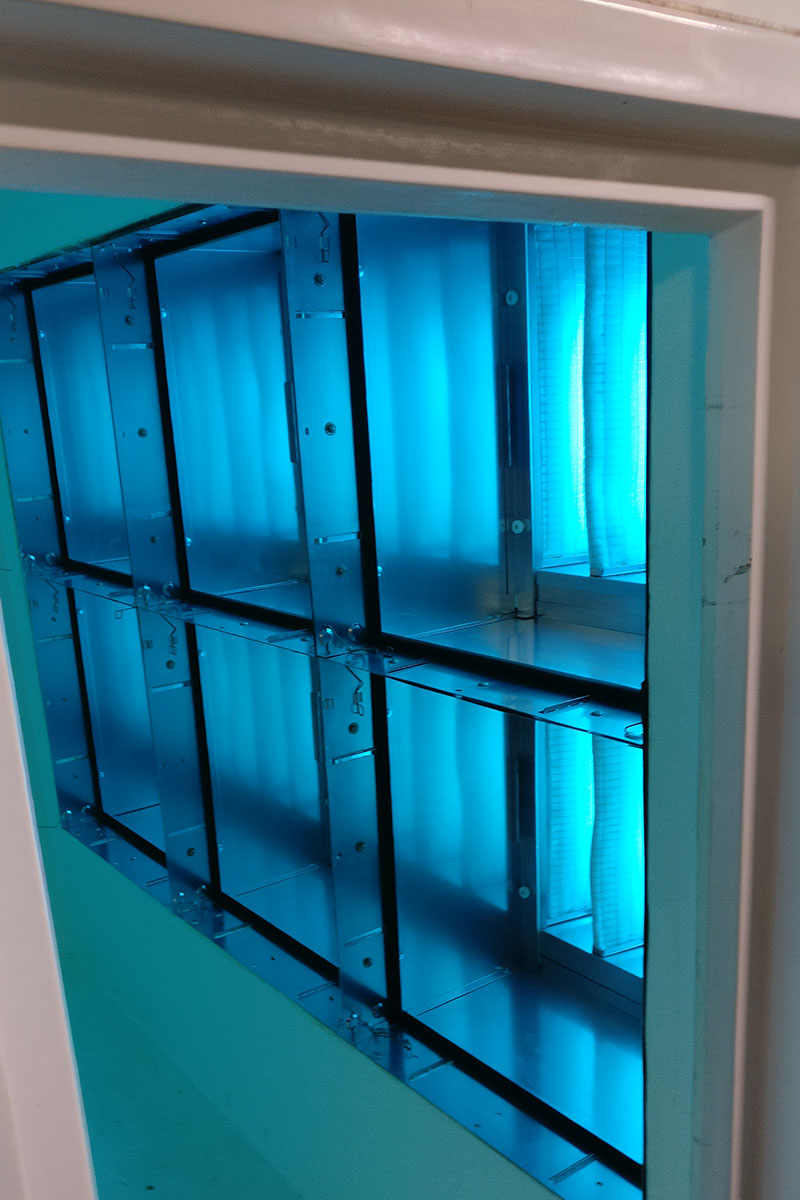
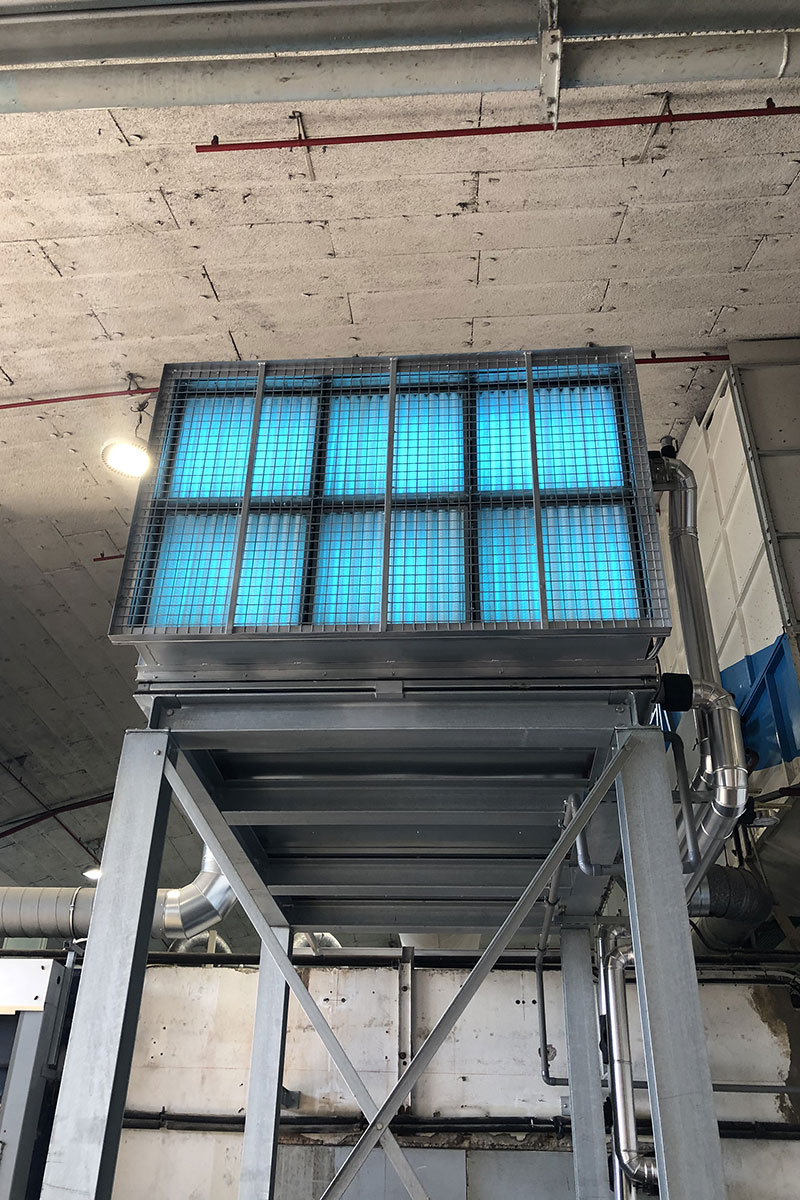
What are the different applications of UVC disinfection?
UVC decontamination can be used to treat:
- air (industrial buildings, ventilation systems, air handling units, etc.);
- water (sanitary treatment of drinking water systems, fish farming ponds, or aquariums, etc.);
- surfaces in sensitive areas (food and pharmaceutical industries, etc.)
UV-C rays are particularly effective at limiting microbiological contamination. This is because they combine three key advantages: high biological efficacy, no chemicals, and continuous operation. Better yet, microorganisms develop very little resistance to the UV-C sterilization process.
The use of a UV disinfection lamp for air disinfection is a clean and reliable solution for sensitive industrial sectors:
- medical industry: reduction of hospital-acquired infections and cross-contamination, without exposing people and equipment to chemicals;
- food industry: reduced contamination on production lines, extended shelf life, compliance with HACCP standards without altering the taste, texture, or composition of food;
- Wine industry: control of yeast, mold, and undesirable microbial flora; improved product stability without the need for significant amounts of preservatives.
This approach reduces health risks, protects products, and ensures regulatory compliance. UVC treatment does not alter product characteristics and prevents any risk of secondary contamination.
Finally, a professional installation improves indoor air quality by eliminating aerosols, spores, and other biological particulates.
How do you design a UVC air decontamination solution?
Inspired by the use of UV rays to sterilize the air and surfaces, Photoclean has adapted this technique specifically for air treatment.
It’s not just a matter of installing a UVC sterilizer. Effective disinfection depends on many factors:
- Sizing the system based on the layout of the premises, the volume of air to be treated, and the air exchange rate required to prevent dead zones;
- type of contaminants present;
- exposure time of microorganisms to UVC;
- distance between the UV lamp and the airflow to be treated;
- airflow velocity;
- prevention of photoreactivation (the ability of organisms to “repair” themselves under the effect of light);
- integration into existing air handling units and ductwork systems.
Still, this technology has its limitations:
- Contaminants must be directly exposed to the radiation, as it does not pass through obstacles.
- UV performance is reduced in the presence of high particle concentrations.
- Efficacy decreases rapidly with distance.
- Exposure that is too short allows microbes to survive.
By adding a proprietary, patented medium to its lamps, Photoclean has solved the dual problem of UVC’s short wavelength and the need for sufficient contact time.
Photoclean does not sell UV disinfection lamps, but offers standalone air decontamination and purification systems tailored to existing facilities. Are you looking for a reliable, safe, and cost-effective UVC disinfection solution? Request an audit for a custom installation.