

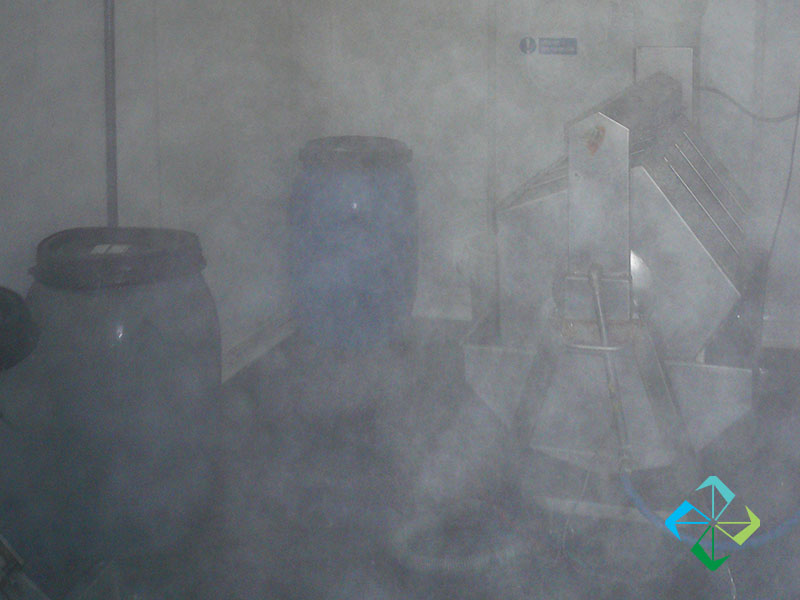
Disinfection by Fumigation or UV Light: Which Should You Choose?
Widely used in the food industry and research laboratories, in particular, where surfaces and the air require strict hygiene standards, fumigation offers clear advantages.
In particular, it is effective against viruses, bacteria, and mold. However, its effectiveness is not comprehensive, and it requires strict conditions for use.
.
Photoclean, a specialist in air treatment and purification, breaks down the pros and cons to help you get a clearer picture.
Fumigation: Techniques and Products Used
The term “fumigation” refers to a disinfection process that involves introducing a gas into enclosed spaces that are empty of people. The primary goal is to eliminate harmful microorganisms.
Fumigation takes place in three stages: introduction of the gas, the exposure time required for it to take effect, and then removal of the product. The process disinfects the air and surfaces—even those that are hard to reach—as well as equipment.
Although fumigation is highly effective against pathogens, it does have some major drawbacks. First of all, it can only be carried out in empty premises and therefore requires operations to be suspended… or waiting until the weekend. This can pose a problem in certain industrial sectors, for example.
Furthermore, this process treats surfaces rather than the air, even though the air is treated indirectly during fumigation.
Finally, this method involves the use of substances that are sometimes toxic (formaldehyde, in particular), making it unsuitable for use in the food industry. It should also be noted that once employees return to the building, new contamination can occur again. The effects of this process are therefore not long-lasting.
UV Decontamination: A Safe Alternative
With many years of experience in air treatment systems, we have long advised companies on finding products tailored to their needs. To provide you with the best solution for disinfecting your facilities, we have developed an innovative technology based on the action of UV-C rays.
UV decontamination is a process that destroys microorganisms, as well as VOCs (volatile organic compounds), microparticles, and toxins that cause unpleasant odors.
In devices designed by Photoclean, the effectiveness of the UV lamp is optimized by the addition of a proprietary filter located nearby. This medium traps unwanted contaminants in its fibers, allowing them to be oxidized—which effectively eliminates them immediately—by UV-C rays. Once installed, our decontamination modules operate continuously without disrupting your operations.
The Benefits of PhotoClean Disinfection Solutions
Our experience as consultants specializing in air decontamination for businesses and local governments has led us to develop a fully customized service. We don’t just sell you state-of-the-art equipment—we offer you end-to-end support in achieving impeccable hygiene and air quality.
When you hire Photoclean, you’ll receive a comprehensive audit of your facilities. This audit allows our engineering department to determine which pollutants to target, their concentrations, the volume of air to be treated, and your layout constraints…
From there, we’ll guide you toward the most suitable product. We design and manufacture—on a worldwide exclusive basis—various air decontamination modules (standalone or adaptable to your air handling unit), as well as terminal units that combine temperature and humidity control with microbiological, chemical, and particulate decontamination.
Please feel free to contact us for more information.