
What are the air filtration standards for the food industry?
Food safety is the top concern for professionals in the industry. It involves controls at every level: product quality, cleanliness of facilities and surfaces, disinfection processes, and more. What are the air filtration standards for the food industry? How can you choose filters suitable for high-volume applications while keeping energy consumption under control? Photoclean, an expert in industrial air treatment technology, breaks it down for you.
Are there any legal standards for air quality in the food industry?
Unlike the medical or pharmaceutical sectors, air quality standards in the food industry do not require a specific type of filter. However, there are a number of standards that can guide your choice.
What are the air quality standards in the food production sector?
At the French and European levels, there are several recommendations and standards applicable to the food industry:
- WHO guidelines establishing threshold limits for fine particulate matter and other contaminants;
- BRCGS Food, IFS Food, FSSC (based on ISO 22000), and EHEDG certifications related to food safety;
- ISO 16890 standard applicable to air filters.
This standard classifies filters based on the size of the particles (PM) that they are capable of capturing at a rate of more than 50 percent:
- PM1: less than 1 µm;
- PM2.5: up to 2.5 µm;
- PM10: between 2.5 and 10 µm.
While the ISO 16890 standard does not require the use of any specific filter, it does allow for an objective comparison of filters.
What is the HACCP approach in the food industry?
Hazard Analysis and Critical Control Points (HACCP) is a method for analyzing and controlling risks in the food industry. This approach takes into account the entire production cycle and therefore includes air quality. HACCP involves several steps, including identifying major hazards, defining critical limits, and implementing effective monitoring and control measures.
As a food industry professional, it is in your best interest to anticipate contamination risks in order to prevent public health issues and product recalls. This prevention involves, in particular, air filtration in the food industry.

Which nonpathogenic contaminants make cheese unfit for consumption?
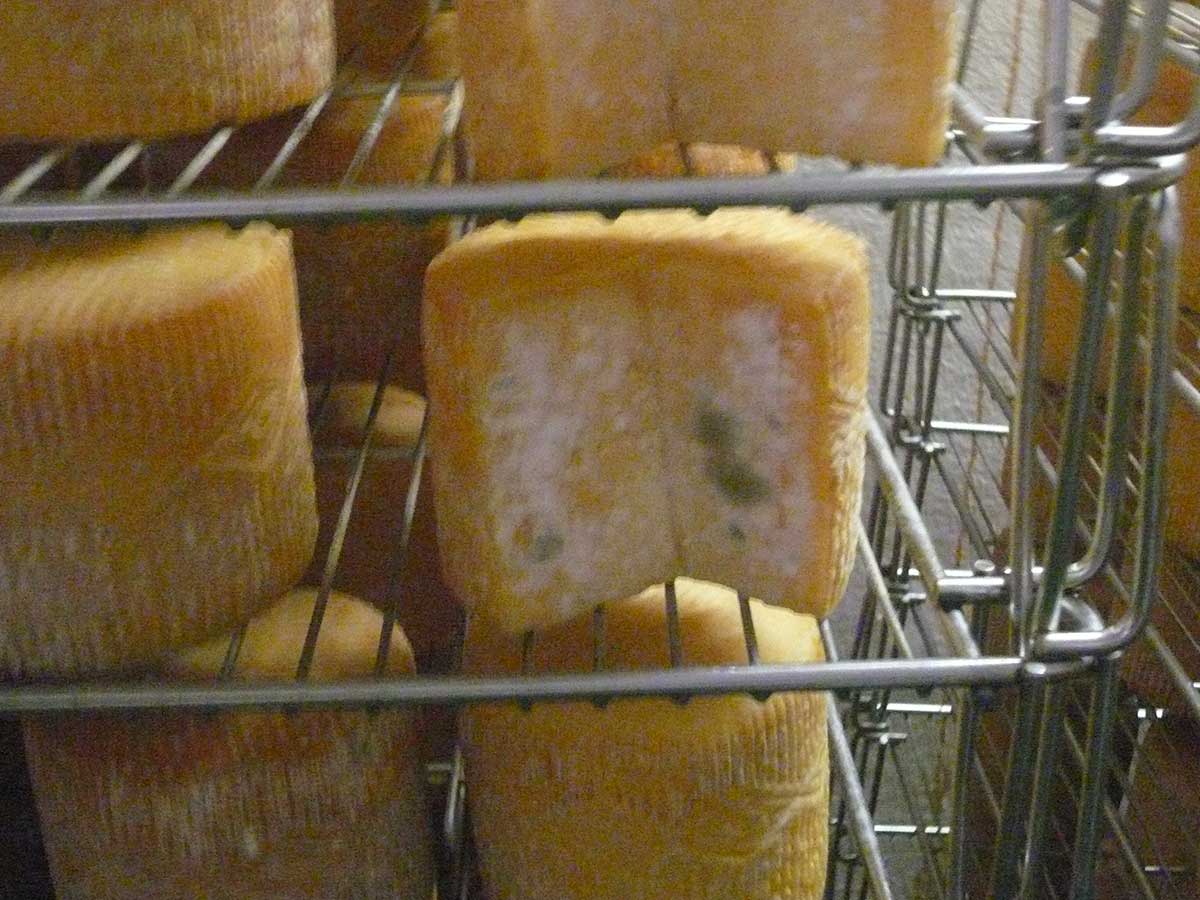
In addition to harmful bacteria, a number of microorganisms are found on cheese. Although harmless, these microorganisms affect the product’s appearance, making it unsuitable for sale. The cheese industry faces two types of contamination:
- Appearance of unwanted mold: While it is not harmful, its presence on cheeses that are not supposed to contain it—such as Emmental or Comté—can result in their removal from sale.
- Cross-contamination: This is common with Roquefort, whose mold (Penicillium roqueforti) is essential to the product but must not appear on any other fresh or hard cheese.
Grated cheese is a special case because it is highly susceptible to mold. Grating exposes the product to air and increases the surface area susceptible to contamination. Poor humidity or temperature control contributes to accelerated mold growth.
Unwanted mold can be removed using a cheese brush. However, while this is a solution for consumers, it represents an additional step—a manual and costly
—for cheese makers.
What measures should be taken to prevent cheese contamination?
Microorganisms, such as noble molds or lactic acid bacteria, are intentionally inoculated into certain cheeses. However, their growth must be strictly controlled. They do not need air to grow, but temperature and humidity levels have a significant impact on their activity.
In general, the presence of microorganisms in cheese-making facilities must be strictly controlled. The conditions under which cheese is produced and stored—ripening cellars, cold storage rooms—are, in fact, conducive to the growth of bacteria and mold.
To prevent health risks and ensure consumer safety, companies in the food industry have several complementary solutions at their disposal:
- strict control of temperature and humidity in manufacturing, storage, and packaging areas;
- regular cleaning and disinfection of equipment and surfaces;
- air decontamination to eliminate microorganisms and prevent cross-contamination.
Photoclean offers high-performance solutions for air treatment in cheese-making facilities. Based on the properties of UV-C rays, optimized by an exclusive, patented medium, our modules treat the air continuously, without pressure drop or excessive energy consumption. Discover PhotoClean technology and request an audit of your facilities.