

What are the air filtration standards for the food industry?
Food safety is the top concern for professionals in the industry. It involves controls at every level: product quality, cleanliness of facilities and surfaces, disinfection processes, and more. What are the air filtration standards for the food industry? How can you choose filters suitable for high-volume applications while keeping energy consumption under control? Photoclean, an expert in industrial air treatment technology, breaks it down for you.
Are there any legal standards for air quality in the food industry?
Unlike the medical or pharmaceutical sectors, air quality standards in the food industry do not require a specific type of filter. However, there are a number of standards that can guide your choice.
What are the air quality standards in the food production sector?
At the French and European levels, there are several recommendations and standards applicable to the food industry:
- WHO guidelines establishing threshold limits for fine particulate matter and other contaminants;
- BRCGS Food, IFS Food, FSSC (based on ISO 22000), and EHEDG certifications related to food safety;
- ISO 16890 standard applicable to air filters.
This standard classifies filters based on the size of the particles (PM) that they are capable of capturing at a rate of more than 50 percent:
- PM1: less than 1 µm;
- PM2.5: up to 2.5 µm;
- PM10: between 2.5 and 10 µm.
While the ISO 16890 standard does not require the use of any specific filter, it does allow for an objective comparison of filters.
What is the HACCP approach in the food industry?
Hazard Analysis and Critical Control Points (HACCP) is a method for analyzing and controlling risks in the food industry. This approach takes into account the entire production cycle and therefore includes air quality. HACCP involves several steps, including identifying major hazards, defining critical limits, and implementing effective monitoring and control measures.
As a food industry professional, it is in your best interest to anticipate contamination risks in order to prevent public health issues and product recalls. This prevention involves, in particular, air filtration in the food industry.

How Should Air Be Treated in the Food Industry?
Maintaining indoor air quality involves three steps:
- regular air exchange;
- controlling humidity and temperature;
- removal of fine particles and microorganisms.
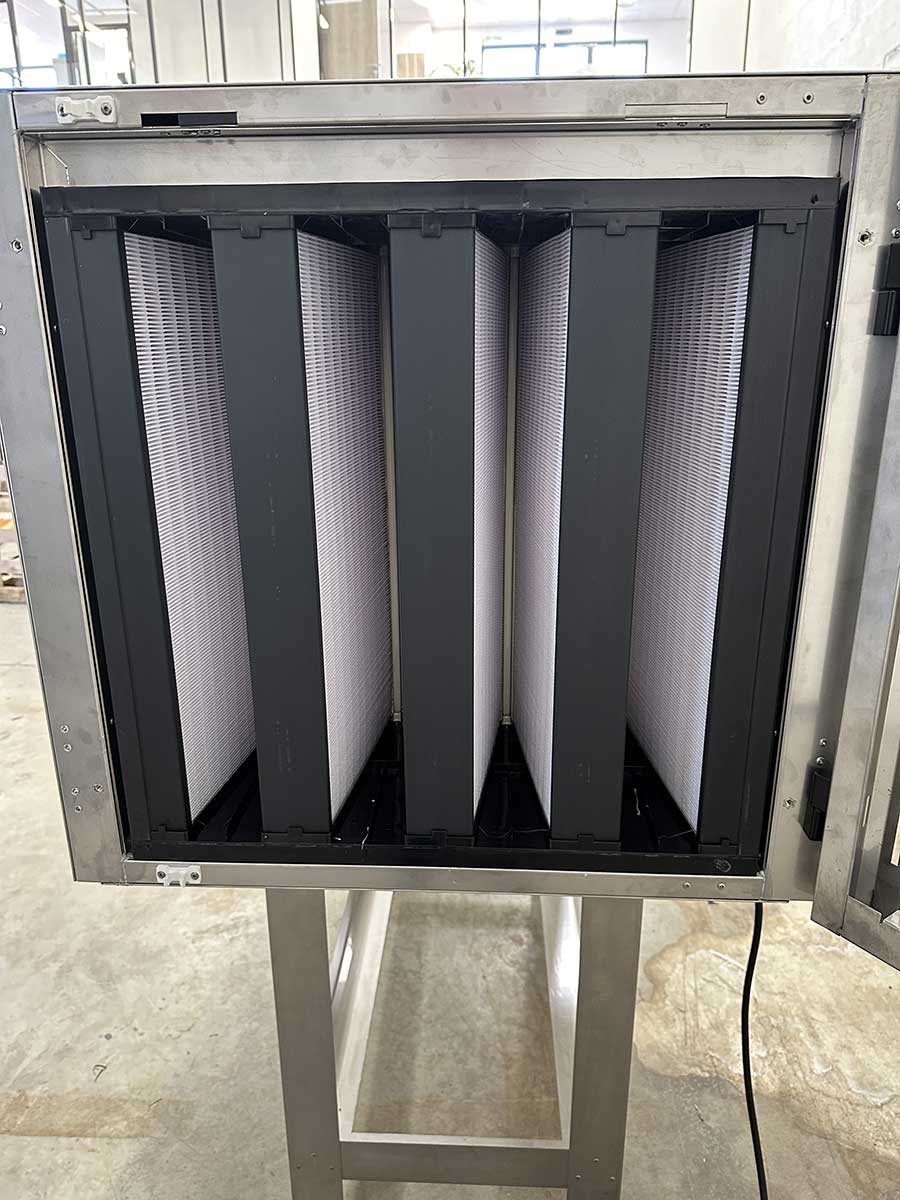
A good air filtration system for the food industry must therefore meet these three requirements. It must also prevent any risk of recontamination. So, how do you choose the right filter?
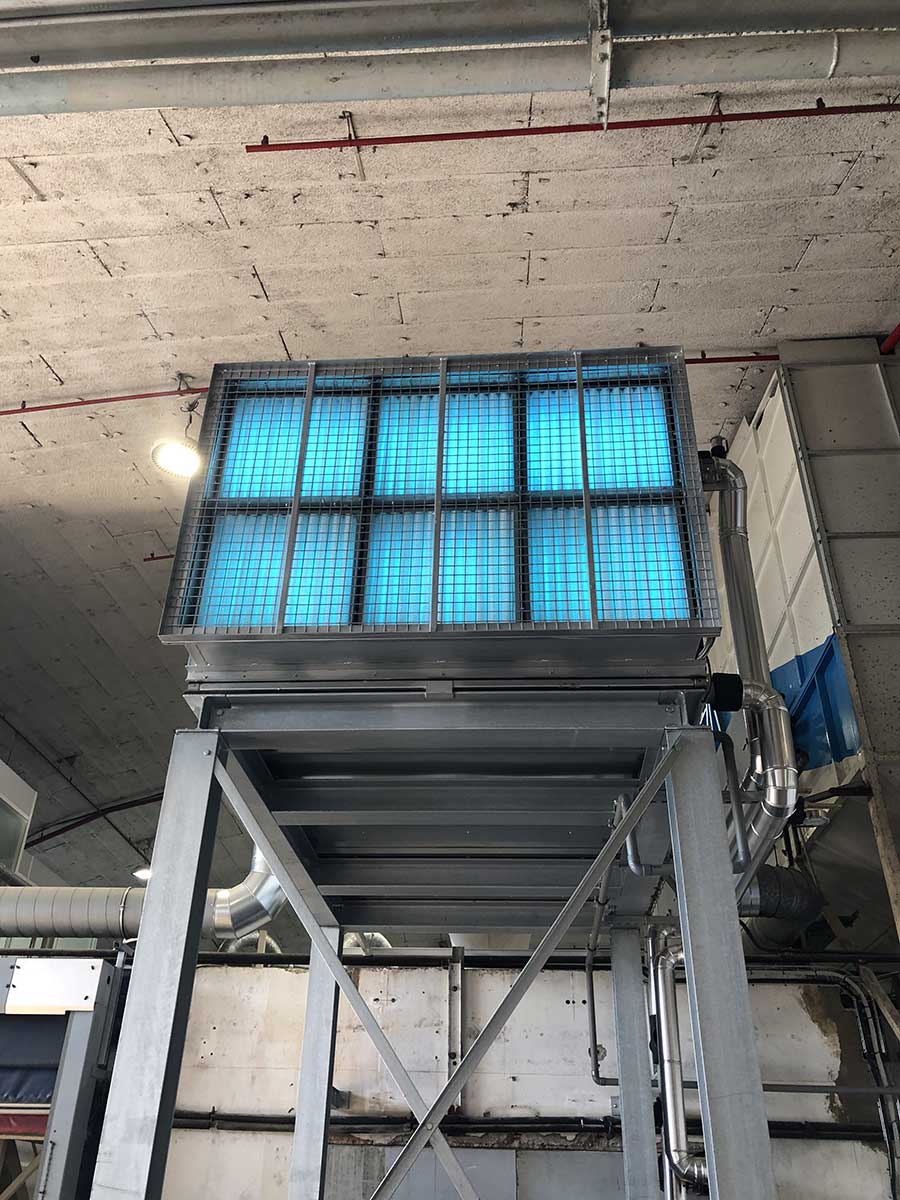
Photoclean, a leading provider of industrial air decontamination since 2005, has developed a customized solution: UV filtration.
What are the benefits of UV air filtration in the food industry?
UV-C rays have long been used to decontaminate water. They alter the DNA or RNA structure of exposed microorganisms, causing their destruction. They offer a twofold advantage: no chemical residues and no post-treatment waiting period.
However, their short wavelength requires close proximity and sufficient treatment time. By adding a proprietary filter medium to the UV lamp, Photoclean has eliminated this problem and created high-performance air treatment modules.
UV filtration offers numerous benefits for the food industry:
- Continuous air treatment while staff are present;
- no pressure drop, resulting in controlled energy consumption;
- capacity to decontaminate several thousand cubic meters of air;
- compact equipment design;
- modular system design (standalone modules or integration into an existing air handling unit or ductwork system);
- no risk of recontamination;
- Fully compliant with HACCP requirements.
To ensure air decontamination in your food production facilities, discover Photoclean’s innovative and customized solutions. Request an audit of your facilities!