

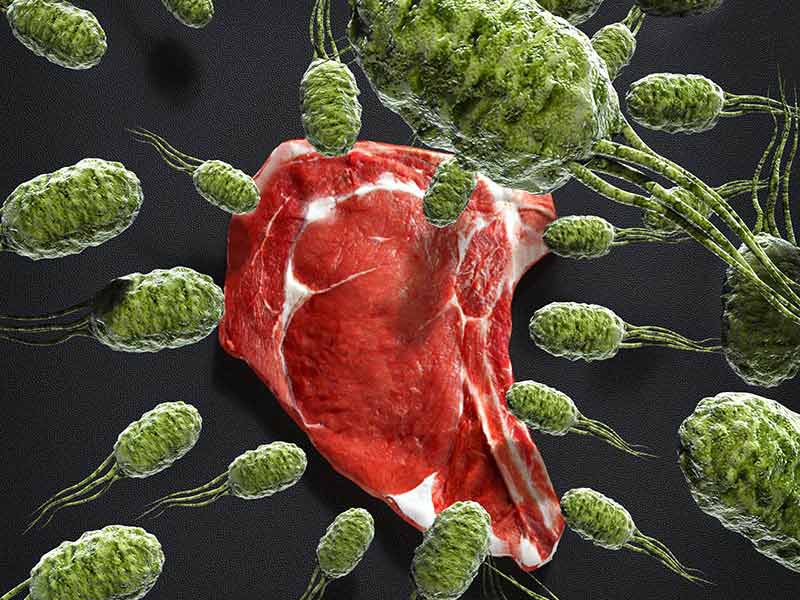
Listeria monocytogenes in the food industry: Understanding the Risk to Control Contamination
In any company whose products are intended for human consumption, production facilities are subject to health and safety standards commensurate with the level of risk involved. One of the main challenges facing the sector is controlling Listeria monocytogenes in the food industry. What is this bacterium, and why is it so difficult to eradicate? What solutions are available to manufacturers?
What is Listeria monocytogenes?
Listeria monocytogenes is a bacterium that causes listeriosis, a rare but potentially serious foodborne infection. The microbiological risk associated with this pathogen is of particular concern to the food industry—and for good reason. Unlike many other microorganisms, Listeria is capable of multiplying at refrigeration temperatures (4°C). This characteristic makes it a formidable threat even in environments designed to inhibit microbial growth.
The products most at risk of Listeria monocytogenes contamination are as follows:
- raw milk dairy products;
- cold cuts and ready-to-eat meat products;
- smoked or processed seafood;
- prepared meals.
Among at-risk populations—children, pregnant women, immunocompromised individuals, and older adults—listeriosis can lead to severe complications, which explains the heightened health vigilance surrounding it.
How do the mechanisms of Listeria contamination pose a challenge for manufacturers?
Listeria is capable of establishing a long-term presence in the production environment. It thrives in hard-to-reach areas: floors, drains, seals, damp areas, and hard-to-clean nooks and crannies of equipment… Once established, this bacterium forms biofilms—protective coatings that make it much more resistant to conventional cleaning and disinfection methods. Its lifespan can sometimes span several years.
For a manufacturer, the consequences of Listeria contamination are severe:
- product recalls;
- administrative penalties;
- damage to brand reputation;
- financial losses that can be substantial.
Managing Listeria risk therefore involves three key challenges: food safety, regulatory compliance, and business sustainability.
What role does air play in managing the risk of Listeria in the food industry?
Listeria monocytogenes is not, strictly speaking, an airborne bacterium. It is not widely transmitted through the air, unlike certain respiratory viruses or molds. Air treatment is therefore not intended to eliminate the bacterium itself.
However, cross-contamination and recontamination remain central to microbiological risk management. For example, after a cooking phase, a safe product can become recontaminated upon contact with soiled surfaces or equipment. Although it is not a source of contamination itself, air plays an indirect role in this process. In fact, it can carry particles and microdroplets that are then redeposited on surfaces and products in sensitive areas. Air facilitates recontamination by Listeria, particularly following cooking or packaging steps.
Microbiological and chemical air decontamination in industrial settings therefore helps prevent foodborne illnesses, including those caused by Listeria.
Why is it important to purify the air in food production facilities?
Cleaning facilities, surfaces, and individual pieces of equipment remains central to preventing health risks. However, air treatment in the food industry addresses a vector of recontamination that is often overlooked. This is where Photoclean comes in, thanks to its exclusive and highly effective technology.
Based on UV-C photolysis combined with a specific medium, our solution directly targets microbiological contamination in the air. It helps limit cross-contamination as well as the recontamination of surfaces and products.
Photoclean does not claim to eliminate Listeria per se, since this bacterium does not come from the air. However, our equipment works in conjunction with cleaning and disinfection protocols to provide a comprehensive, 360° approach.
Our approach is part of a comprehensive process that includes an audit of the premises, followed by the design of a customized solution. Our in-house engineering department provides detailed layout plans and selects the appropriate UV decontamination modules. These modules, which are compatible with existing air handling units and ductwork systems, can also be installed as standalone units.
Controlling Listeria monocytogenes in the food industry relies on a combination of measures: facility and surface hygiene, as well as process and workflow control. Air quality is an additional factor in limiting recontamination and ensuring the long-term safety of production areas.