
What is a “gray room”?
Photoclean, a company specializing in industrial air treatment, addresses an important question for manufacturers today: What is a gray room? This type of space is particularly common in the food industry, where it helps control microbial contamination. Let’s take a closer look at the benefits of this room and how it differs from a cleanroom.
Gray Room: What Are Its Features and Uses?
The gray room can be defined as the food industry’s equivalent of a cleanroom. In this space, the presence of microorganisms is strictly controlled. To a lesser extent, the particle count is also limited.
The design of a gray room meets the needs of manufacturers by creating a controlled, but not sterile, environment. This storage area helps prevent cross-contamination, which is common in food production or processing facilities. Gray rooms also facilitate the maintenance and cleaning of equipment used in cleanrooms, thereby serving as an “airlock” between a sterile environment and the outside.

What is the difference between a cleanroom and a gray room?
A gray room is an intermediate environment between a standard environment and a cleanroom, also known as a controlled environment. The differences between a gray room and a cleanroom lie in the level of requirements and the applicable standards.
A cleanroom is a highly regulated environment that is specifically governed by the ISO 14644-1 standard. It meets the following parameters:
- controlled temperature, pressure, and humidity;
- virtually no particles, fumes, or microorganisms;
- capability of maintaining positive or negative pressure.
The main features of the gray room are:
- prevention of bacterial contamination;
- optimized air filtration;
- facilities not subject to ISO standards.
This second option, which is more flexible and less expensive, is particularly well-suited for professionals in the food industry.


What are the benefits of the Photoclean solution for cleanrooms?
Designing a cleanroom involves controlling air quality and air exchange. This prevents any unwanted microorganisms or inert particles from entering the room. An efficient system also makes it easier to maintain conditions suitable for the activity. Finally, it ensures optimal cleanliness and simplified maintenance.
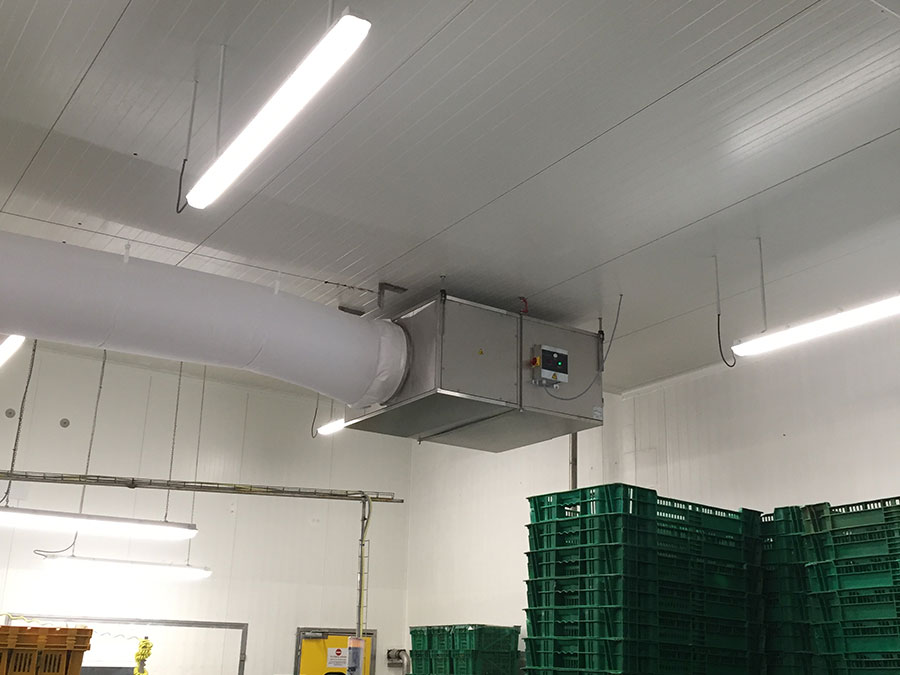
Photoclean solutions are based on a unique combination of UV-C rays—which destroy virtually all microorganisms—and a proprietary medium that optimizes their effectiveness. Our systems differ from conventional filtration systems in three key ways:
- Temperature and humidity control separate from contamination treatment;
- reduced temperature requirements to achieve satisfactory air quality (no longer necessary to lower temperatures to very low levels);
- a more compact, energy-efficient system that can be adapted to any configuration.
To learn more about our industrial air treatment solutions, contact Photoclean and schedule an on-site assessment for a custom installation.