
The Food Industry and Airborne Microbial Contamination: A Vulnerable Sector
Manufacturing and processing facilities are particularly susceptible to airborne contamination. Unfortunately,the food industry and airborne microbial contamination are closely linked!
Photoclean outlines the main causes of this problem, the impact it can have on your business… and the solutions to address it.
Why Is the Food Industry Vulnerable to Airborne Contamination?
Because the industry works with living raw materials and uses specific processes, the food industry is highly susceptible to biocontamination. This term refers to the presence of microorganisms, particularly viruses, bacteria, yeasts, and molds. Production facilities are also prone to toxin proliferation, which is facilitated by the presence of VOCs (volatile organic compounds) on surfaces.
Depending on the specific sector,the food industry is exposed to variouscontaminants:
- In bakeries and pastry shops, the cooling phase poses an increased risk of contamination by molds and yeasts;
- In meat curing and meat-processing facilities, the primary problem is bacteriological in nature: the growth of pathogenic microorganisms such as Salmonella, Escherichia coli, or Listeria, as well as molds…
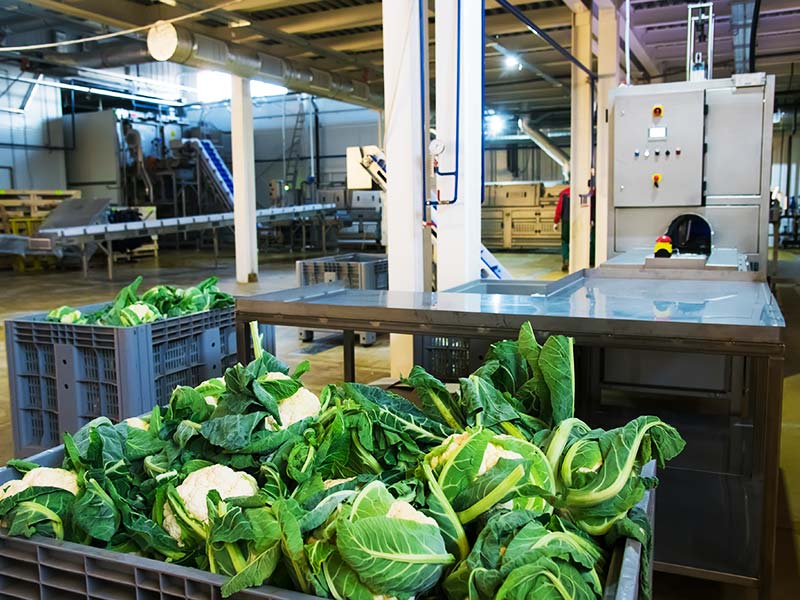
- In the fruit and vegetable sector, there is not only the proliferation of agents that alter the product’s characteristics but also accelerated ripening due to the presence of ethylene in the ambient air;
- In the dairy – cheese sector, numerous microorganisms can alter the appearance, odor, or taste of products, or even pose a health risk (such as the pathogens that affect meat);
- The wine industry is susceptible to the harmful effects of molds associated with chlorophenols present in wood (crates, barrels, pallets, etc.), which cause—among other things—the undesirable “cork taint.”
What are the consequences of airborne contamination in a food industry facility?
The impact of airborne contamination in food processing facilities should not be taken lightly. Recurring quality issues lead to customer dissatisfaction, a loss of trust, and even delisting. In all cases, this results in significant financial losses: products discarded because they are unfit for sale, customer returns, unsold inventory, and more.
The other danger of biocontamination in the food industry concerns consumer health. Everyone has heard about the sometimes dramatic health consequences of Listeria or Salmonella in food products…
How can the air in the food industry be decontaminated?
Fortunately, there are now decontamination solutions available for the food industry. These processes vary:
- HEPA filtration is the best-known method. It involves capturing all fine particles present in the ambient air of your facilities. They are approximately 99.9% effective, but these filters have significant drawbacks: they take up a lot of space, have high pressure drop, and require frequent air changes or recirculation, resulting in high energy consumption.
- UV filtration is an innovative, reliable, and environmentally friendly technique. By combining the action of UV-C rays with a medium that acts as a catalyst, these treatment units optimize air quality with minimal space requirements and energy costs. In addition, they are compatible with air handling units (AHUs).
Request an audit from PhotoClean for your customized air treatment solution.