
How Is Disinfection Carried Out in the Food Industry? Photoclean Has the Answer
The food industry is particularly vulnerable to contamination by unwanted microorganisms that can even be harmful to human health. Decontamination is therefore a critical issue for professionals in the industry. Photoclean explains how disinfection works in the food industry and highlights the benefits of its solution.
What are the risks associated with contamination in the food industry?
Food contamination poses a danger to companies that produce, package, or use cheese, meat, fresh produce, wine, or any other food product. The consequences of food contamination are numerous:
- health risks due to consumer food poisoning;
- economic challenges related to product recalls;
- impact on brand image and business partnerships…
The news is full of examples of food contamination: Listeria in cheese, Salmonella in meat, bacon, or eggs, and mold in baked goods, pastries, and desserts… The list of products recalled from store shelves for health reasons on Rappel Conso, the government’s official website, is growing steadily.
We should also highlight recent cases of mineral water contamination, which raise questions about the conditions under which products intended for human consumption are packaged and stored.
At the same time, consumer expectations are changing: consumers are more vigilant and demand greater transparency.
How can we ensure optimal safety in food industry facilities?
The disinfection of food-processing facilities involves several aspects:
- surface cleaning and disinfection;
- clean-in-place (CIP), which automates the process in a closed system;
- air quality through the extraction of humid air and controlled air exchange.
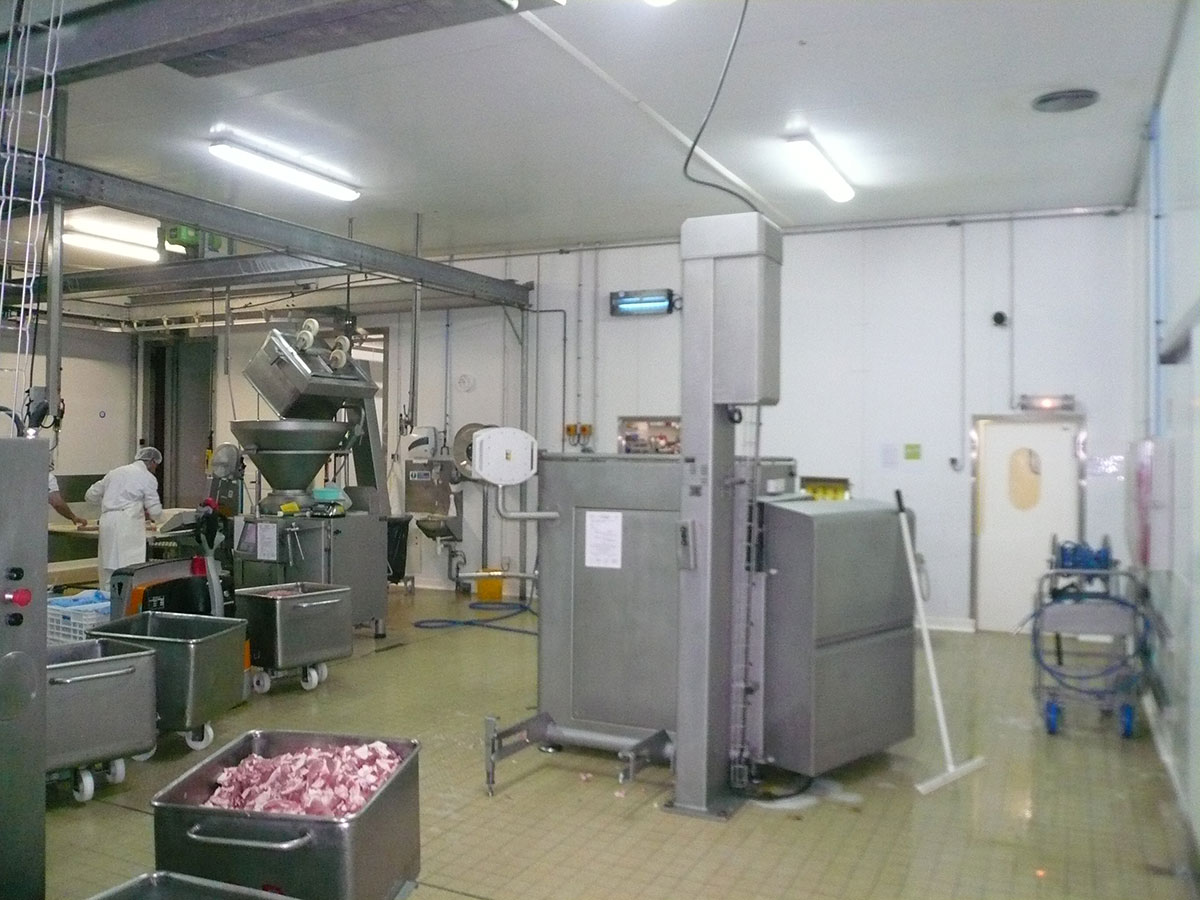
Air treatment in the food industry plays a central role in preventing contamination in production facilities. Indeed, humidity promotes microbial growth and leads to changes in the organoleptic properties of products (unpleasant odors, changes in appearance, etc.).
Air circulation also helps prevent recontamination of the products before packaging.

What does UV disinfection involve in the food industry?
UV-C rays have the ability to destroy exposed microorganisms by altering their genetic structure. This capability has long been used for water treatment, but has also proven to be highly effective for disinfection in the food industry.
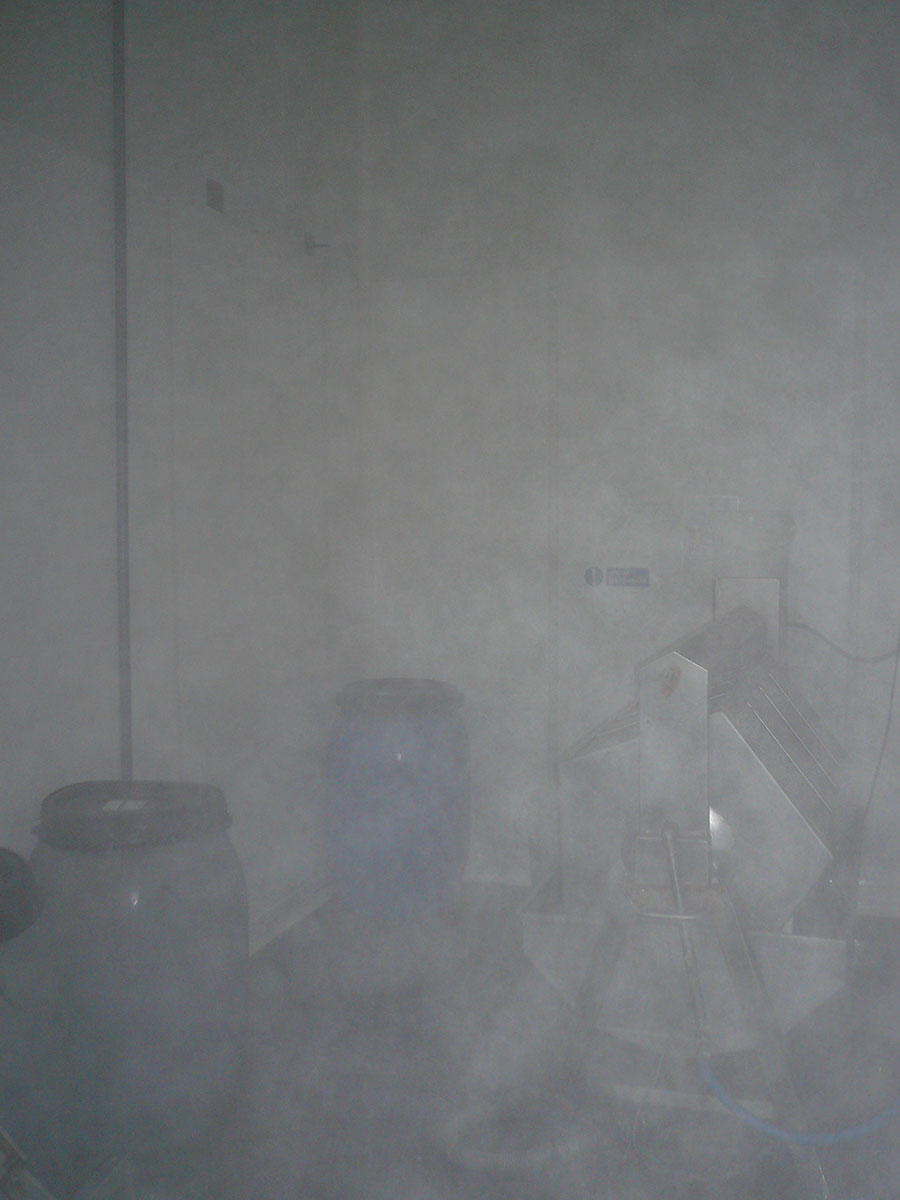
While misting or fumigation are viable options, UV disinfection for food offers clear advantages in terms of reliability and simplicity. Its only limitation is related to the wavelength of the rays, which requires passing the items to be treated very close to the radiation source… and keeping them there long enough to eliminate microorganisms.
What is the Photoclean disinfectant solution?
This industrial UV air treatment process relies on the combination of UV-C rays and a medium that optimizes their effectiveness. This medium increases the surface area for exchange and traps contaminants as they come into contact with the UV lamp. The advantage? Maximum performance with a minimal footprint.
This innovative solution effectively disinfects the air without pressure drop or excessive energy consumption. Photoclean decontamination modules are available in standalone versions or as units that can be integrated into an existing air handling unit to accommodate your technical requirements. The equipment can continuously treat very large volumes of air and destroys up to 99% of the microorganisms present.
Contact Photoclean to receive a comprehensive audit of your industrial site and customized solutions.