
Photoclean
operates in the dairy and cheese industry
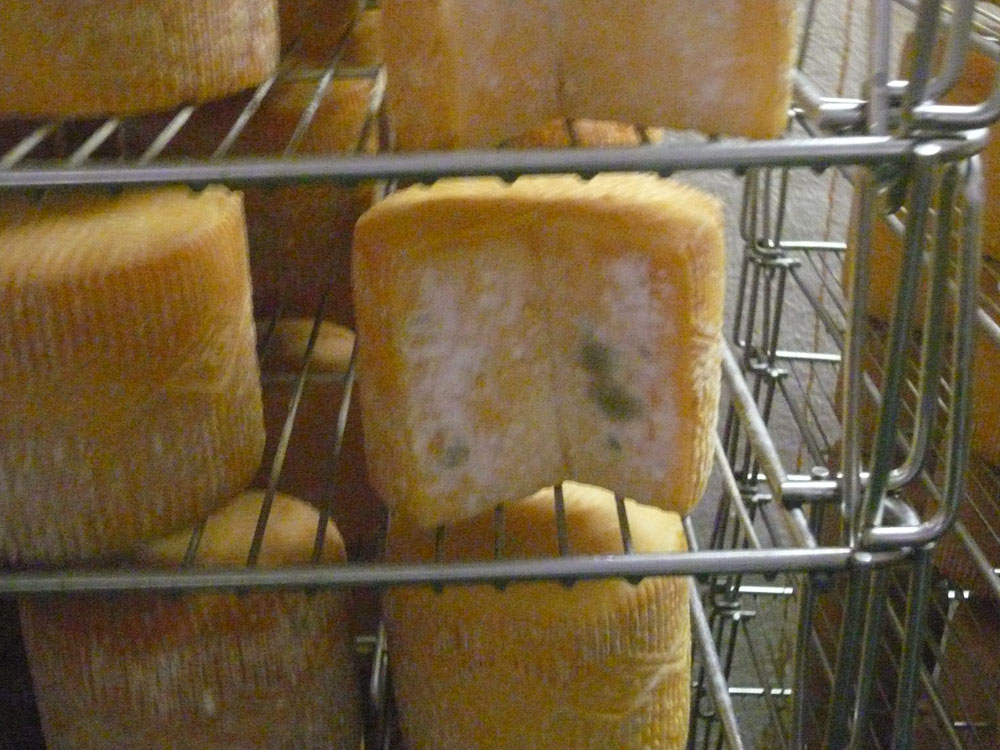
Like all foods, dairy products and cheeses can become contaminated at some point during their production, processing, or packaging. Due to their very composition and production conditions, milk and dairy products can be contaminated by microorganisms present in large numbers in the air, which, by multiplying in the environment, cause changes that are detrimental to their quality. This spoilage can be caused by bacteria, yeasts, and molds and results in defects in taste, odor, appearance, and texture.
Your Challenges
Like all foods, cheese, milk, and other dairy products can become contaminated at some point during their production, processing, or packaging.
This contamination is caused by certain microorganisms—either naturally occurring in the environment or resulting from pollution caused by human activities.
Due to their very composition and production conditions, milk and dairy products can become contaminated with microorganisms that, as they multiply in the product, cause changes that adversely affect their quality.
This spoilage can be caused by bacteria, yeasts, and molds and results in defects in taste, odor, appearance, and texture.
Contamination is also directly dependent on the temperature and humidity of the premises and therefore varies with the seasons.
Certain microorganisms (Escherichia coli, Listeria monocytogenes, Salmonella, etc.) even pose a risk to human health.
Since temperature, humidity, and cleaning are generally inherent to the process, the only way to effectively combat product contamination is to destroy the contaminants—primarily airborne ones—in the environment.
Our Solutions
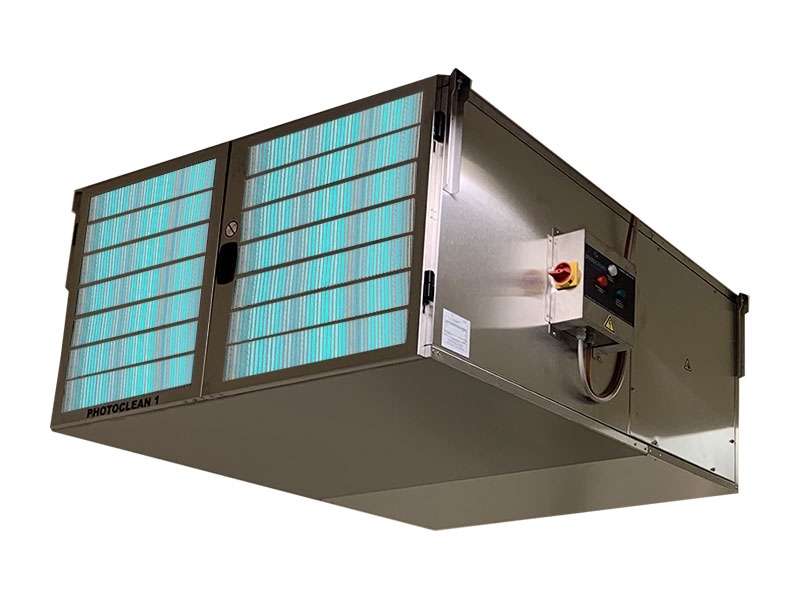
For many years now, Photoclean Quartz has been developing a comprehensive line of units incorporating all of our photolysis-based air decontamination modules, designed to:
- Minimize as much as possible the amount of mold, yeast, and bacteria in the air that could grow on surfaces and products.
- Eliminate any chemical contaminants in the air (VOCs, odors, etc.)
- Maintain this effectiveness over time.
Our fully autonomous modules are installed in areas with little or no air treatment, ensuring air recirculation and treatment at a rate of 5 to 20 room air changes per hour per unit.
Our units represent the perfect combination of the performance and reliability of an air handling unit and the simplicity of a standalone module.
Our photolysis-based degradation processes offer the unique advantage of continuously destroying microbiological and chemical contaminants as well as odors.
Our modules continuously destroy contaminants in three phases:
Sterilization
The very short wavelengths (254 nm) of UVC germicidal lamps penetrate deep into the DNA of microorganisms, preventing them from replicating.
Adsorption
All organic contaminants (microbiological or chemical) are adsorbed by our media, which retains them until they are completely destroyed (mineralized).
Generation of Oxidizing Radicals
Generation of extremely powerful oxidizing radicals (OH°) through the combined action of UVC light and a catalyst capable of continuously destroying bacteria, mold, VOCs, and odors, and even breaking down the most complex chemical compounds.
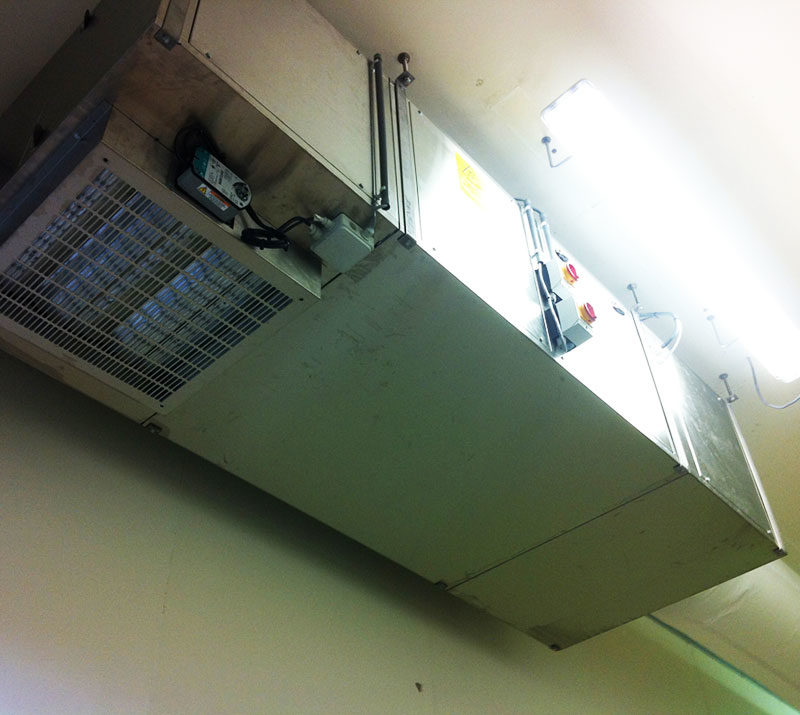
In addition, our cabinets can incorporate or be combined with:
- systems for extracting stale or humid air
- humidification or dehumidification systems that use our air distribution duct networks
- air-handling units to regulate temperature and/or humidity
They trust us
Request for Information
Other Business Sectors