Decontamination of a cheese factory

Problem Statement

The project involved working with a cheese factory that specializes in producing “semi-industrial” products using traditional methods.

The challenge of the production process lay in the wide variety of products offered by this company:

  • Soft cheeses with bloomy, washed, or mixed rinds
  • Soft-textured blue cheeses
  • Semi-hard cheeses…

In fact, each product can potentially contaminate another product.
Since one of the most sensitive areas is the aging room, we first conducted an audit of the airflow, checked the specifications of the air handling units that regulate the temperature, and verified the exhaust airflow rates.

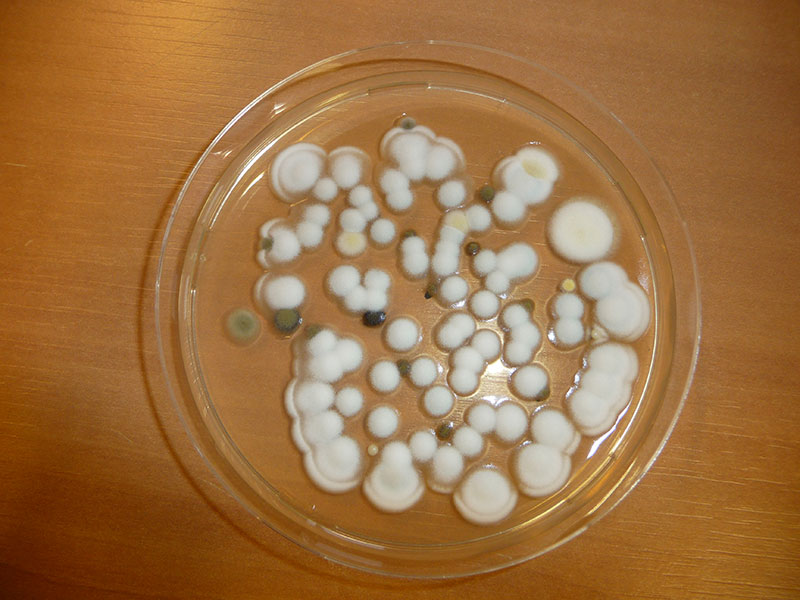
Among other things, we found that there was just as much contamination after the absolute filters as there was before, so our first priority was to determine the cause of this situation.

One of the main reasons for contamination in these facilities is that:

  • The very humid air generated during washing must be vented several times a day
  • When the exhaust fan is turned on, the air is replaced by fresh air, but this fresh air is immediately drawn in by the exhaust fan (next to the air outlet) without having time to circulate throughout the room
  • When the exhaust fan is turned off, all the fresh air creates positive pressure in the room, causing potentially “contaminated” air to flow into other rooms—primarily sensitive areas such as the drying rooms.
  • Managing Moisture During Washing:
  1. Extract 5,000m³ of air per hour using the existing exhaust fan
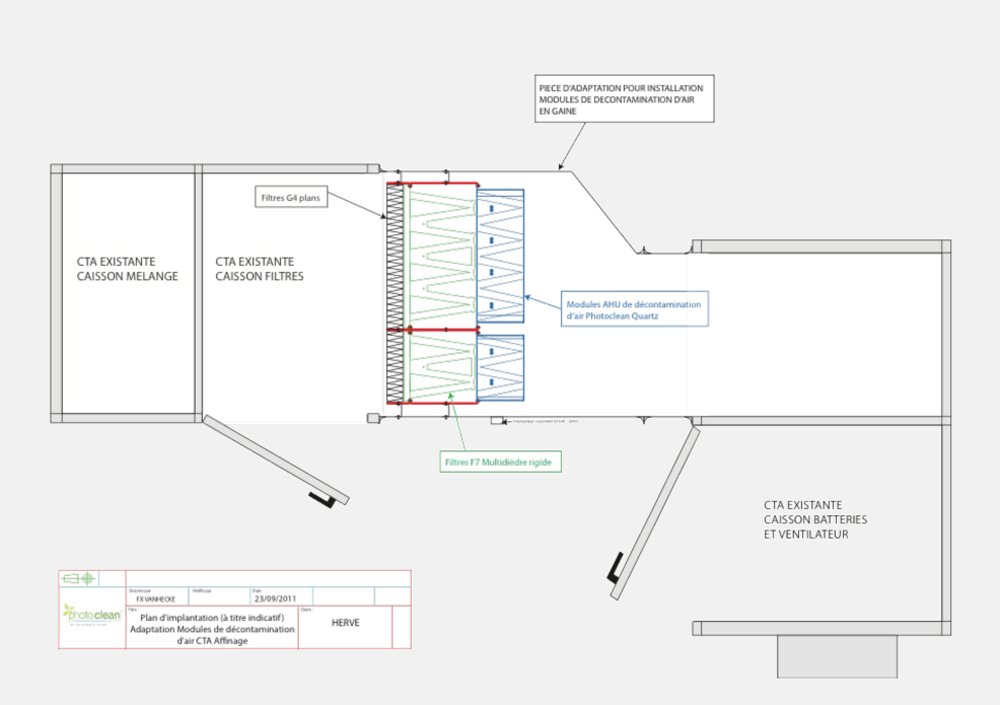
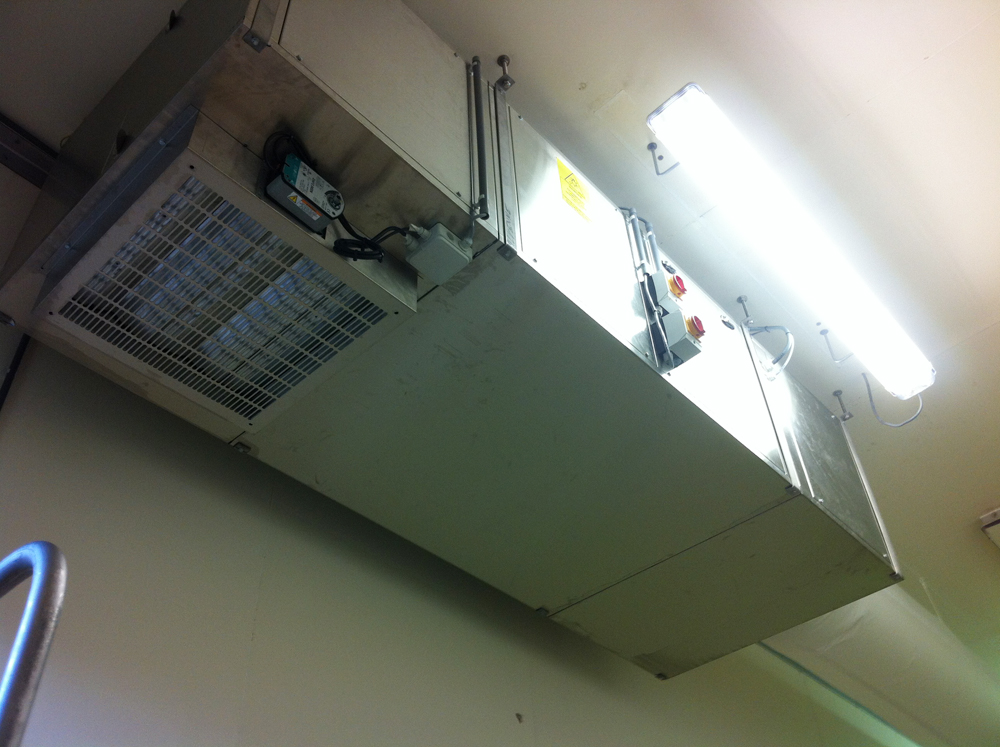
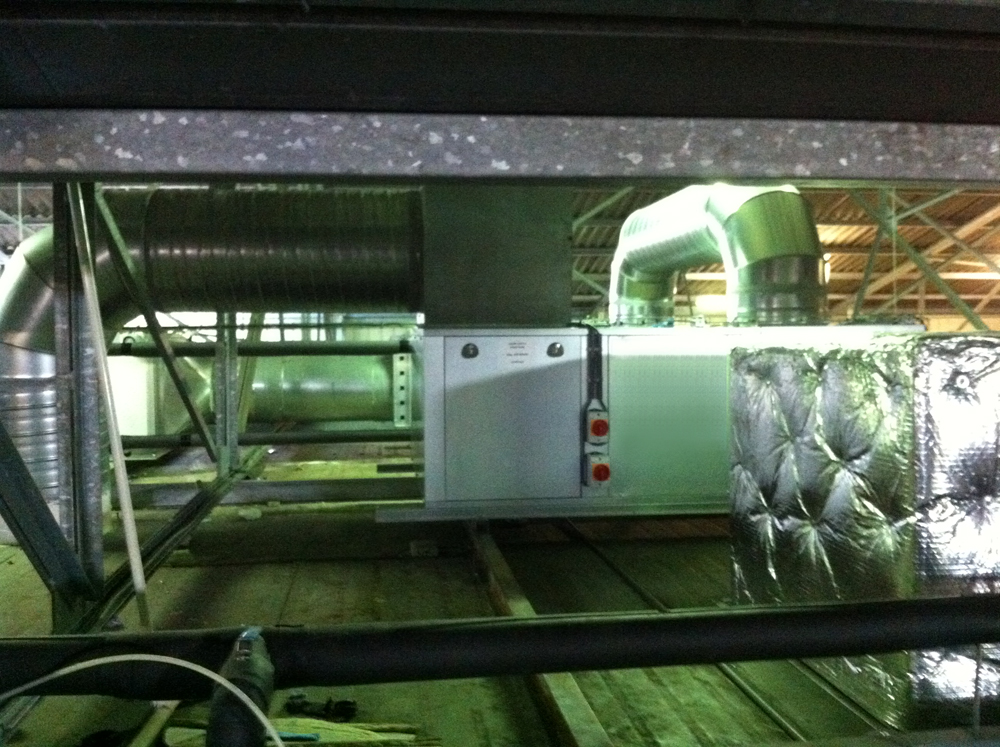
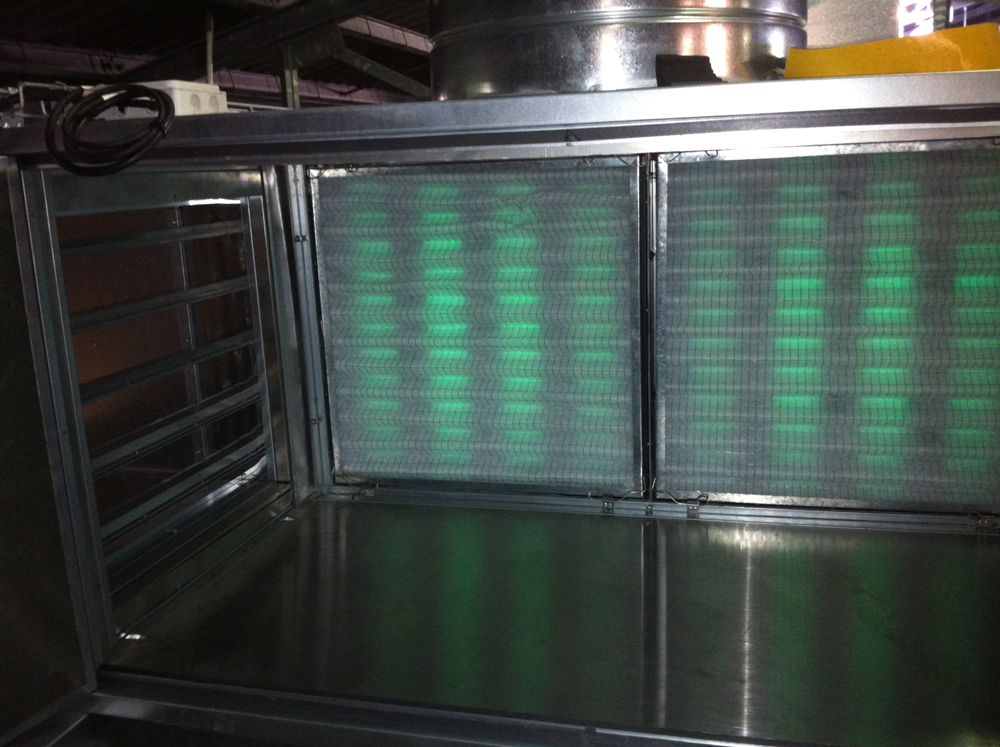
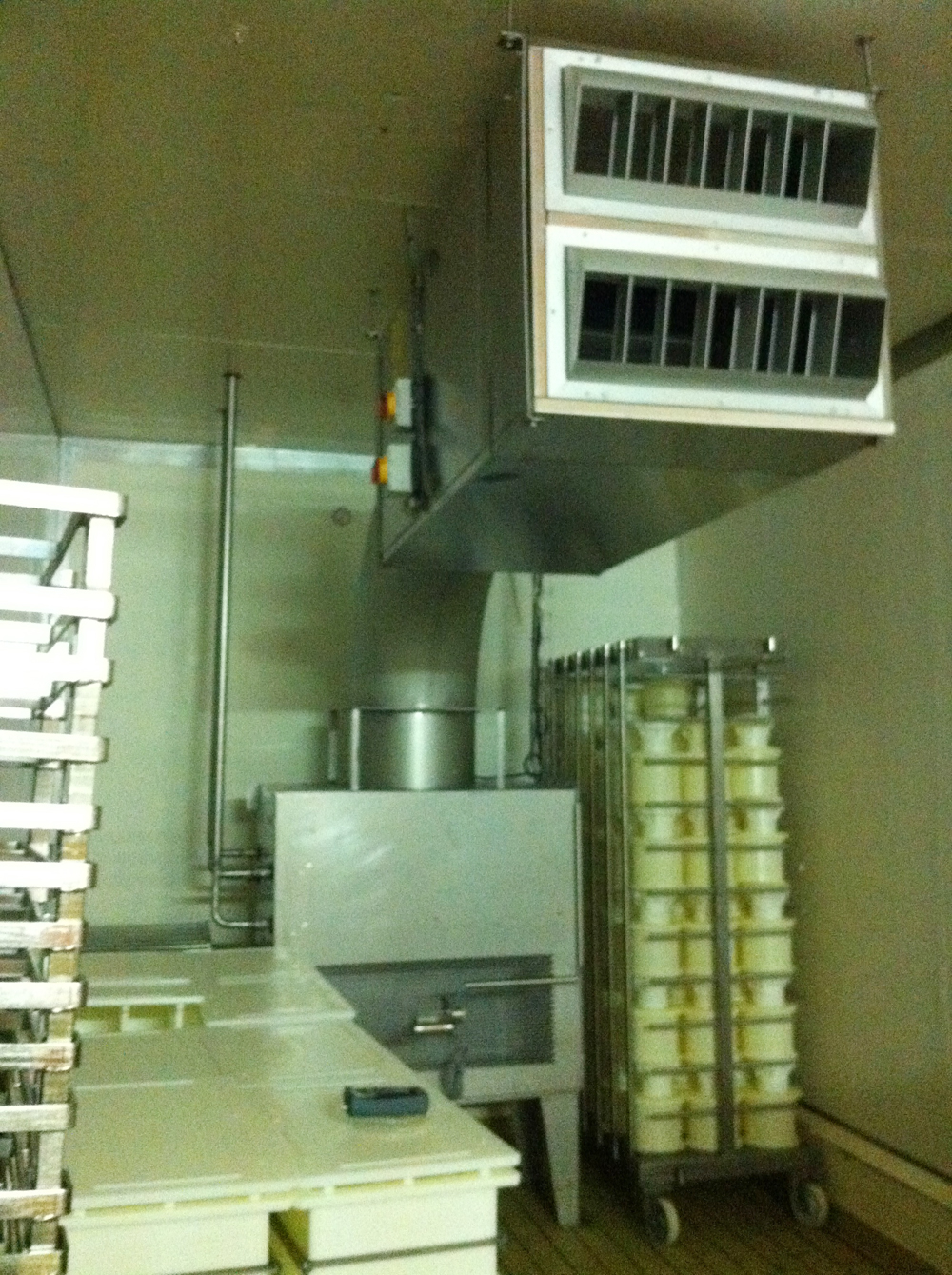
  2. Compensate for this extraction with 5,000m³ of filtered and decontaminated air by integrating our modules into the existing HVAC ductwork and installing our Compact AirPur 7,200m³/h unit in the room’s attic.
  3. Dehumidify the air in the room as quickly as possible by condensing the air purified by our modules using the AHU’s heat exchangers.
  4. Force the air to circulate throughout the entire room to prevent moisture buildup, using the fabric duct to be installed on our unit
  • Continuous recirculation of the room’s air:

Above all, it was extremely important to be able to continuously treat microorganisms in this room to prevent cross-contamination between different types of production.

Furthermore, the air in this room had humidity levels and a temperature that were particularly conducive to the spread of contamination.

The goal, therefore, was to use our Compact AirPur 7200 m³/h to continuously recirculate the air in the rooms 12 times per hour (one air change every 5 minutes) to prevent the growth of airborne contaminants in this room and their deposition on the products.

Equipment Used

Compact AirPur 5400

Do you have a question?
Contact us

Scroll to Top