
What is UV disinfection, and what are the other methods of
decontamination?
UV rays, which have long been used to decontaminate water without the addition of chemicals, have some interesting properties. But what exactly is UV disinfection? What are the applications and limitations of this process? An expert in industrial sterilization solutions provides the answer.
What is the UV disinfection method?
UV-C rays are unique in that they affect the genetic material of organisms. This radiation alters their DNA or RNA, causing them to be inactivated and destroyed. UV disinfection is a reliable and environmentally friendly technique that effectively decontaminates water or air.
What is UV filtration?
The systems used in water treatment and in aquariums involve exposing the liquid to UV radiation to eliminate any microorganisms present. Using a pump, the water is directed into a UV sterilizer and then returned to the tank or aquarium.
Do UV rays kill bacteria?
By inhibiting the vital functions of microorganisms, radiation causes them to be destroyed. UV-C light eliminates 99.99% of mold, yeast, viruses, and bacteria, without the use of chemicals or leaving any residue after treatment.
What are the limitations of conventional UV disinfection?
While UV sterilization is highly effective, it has one major limitation. UV-C radiation has a short wavelength (between 180 and 280 nm), which means the item being treated must be placed very close to the radiation source. In practice, this poses a problem for air treatment, particularly when dealing with very large volumes—such as those found in industrial facilities.
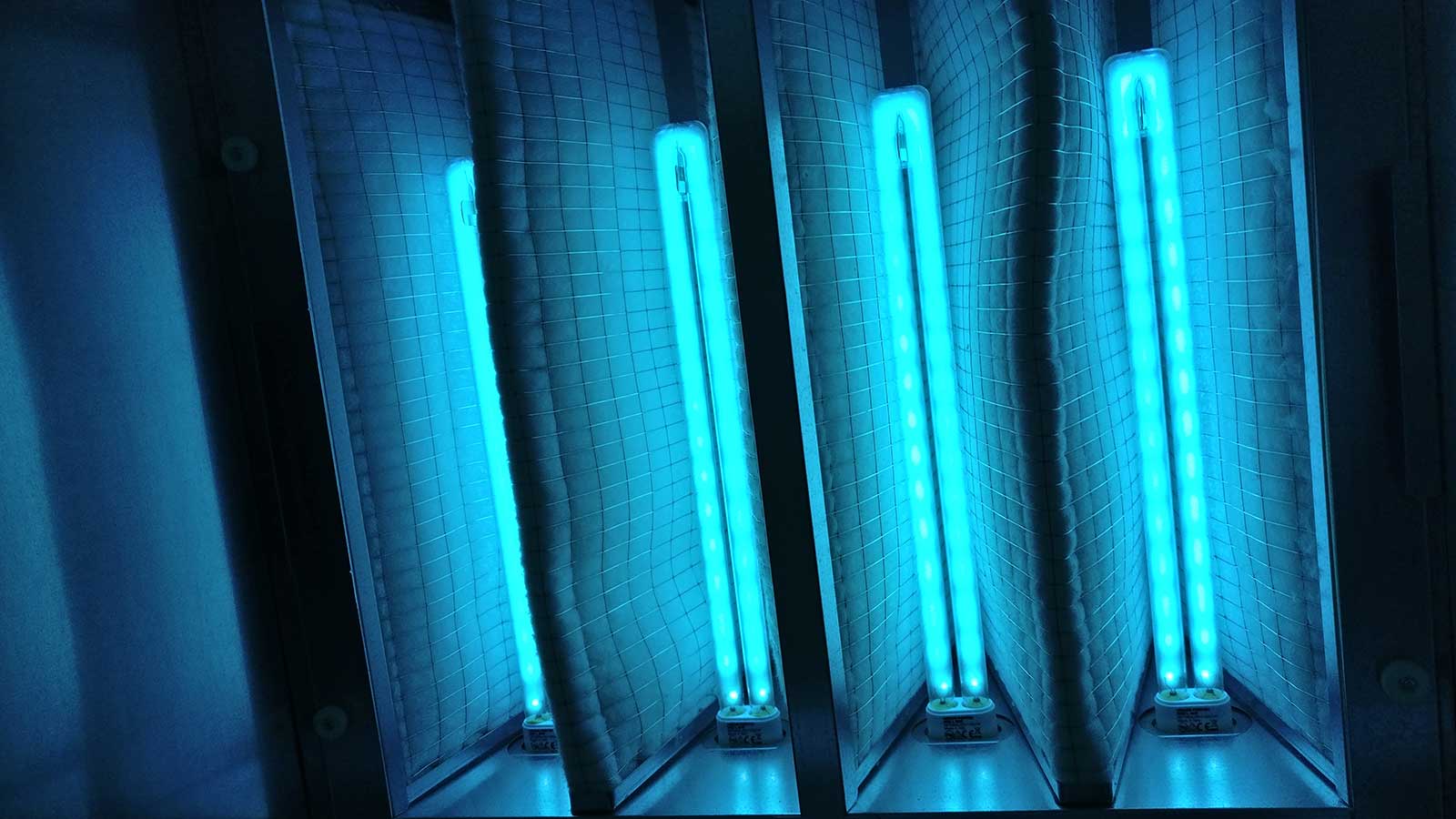
Fortunately, PhotoClean has developed a UV disinfection solution that circumvents this problem: photolysis. This process combines a UV disinfection lamp with a proprietary, patented medium. This medium enables:
- to retain contaminants long enough to ensure their destruction;
- to increase the treatment surface area by a factor of 4,000, thereby eliminating concerns about radiation distance;
- to dramatically reduce the size of sterilization devices and treatment time.
Photolysis is currently the best solution for disinfecting and sterilizing the air in enclosed spaces, even large ones.
What do Photoclean’s sterilization solutions involve?
With two decades of expertise in industrial air treatment, Photoclean has developed techniques and products specifically designed for this sector. The sterilization modules enable the cost-effective treatment of large volumes of air, without excessive energy consumption and with a minimal footprint. UV sterilization is used in a variety of industries, including food processing, medical, and pharmaceutical, for example.
Photoclean offers a comprehensive range of products: stationary or mobile standalone decontamination units, universal modules that can be adapted to existing air handling units (AHUs), and more. In addition, the company provides personalized support, including facility audits, tailored advice, an action and implementation plan, as well as staff training on equipment use.
With PhotoClean’s UV-C sterilization solution, you can effectively treat several thousand cubic meters of air continuously and without pressure drop.