
What Is Industrial Air Treatment? Definition, Challenges, and Solutions with Photoclean
At a time when numerous food safety scandals are regularly tarnishing the reputations of major players in the food industry, the issue of preventive measures has become particularly pressing. What solutions are available to combat pollutants and contaminants? What is industrial air treatment, and why is it crucial for improving consumer protection? Find all the answers with Photoclean, an expert in food industry air treatment.
Industrial Air Treatment: What Is It?
Industrial air treatment encompasses various aspects, mastery of which is essential in the food industry. In summary, industrial air quality depends on three factors:
- temperature;
- humidity (or moisture content);
- pressure conditions.
Controlling these factors ensures product quality and prevents the risk of microbiological contamination. Air treatment in industrial settings also aims to ensure that facilities comply with health and safety standards.
In which industrial sectors is air treatment essential?
The food industry is particularly affected by air quality requirements. Two sectors in particular need high-performance air treatment solutions:
- The food industry: In production, processing, or packaging facilities, the “one-way flow” principle helps limit cross-contamination. The idea is simple: a product must never be sent back through a dirtier area. Combined with air decontamination in the food industry, this procedure optimizes product safety.
- The wine industry: In aging rooms containing barrels, high humidity is maintained to prevent the wine from evaporating through capillary action. This characteristic increases the risk of contamination, particularly mold growth, hence the importance of an effective air treatment system.
What are the solutions for filtering contaminants in industrial settings?
Traditionally, air treatment involves two types of filters. Prefiltration is primarily intended to protect the filtration system and proves ineffective against contamination. As for conventional filtration in air handling units (AHUs), its main
purpose is to protect the heat exchangers, and it is energy-intensive.
Until recently, air handling units (AHUs) and filtration were primarily designed to ensure user comfort or regulate the temperature of buildings. Fortunately, air treatment technologies have evolved. Let’s take a closer look at the Photoclean solution.
Industrial Treatment Systems vs. Photoclean Modules: What Are the Differences?
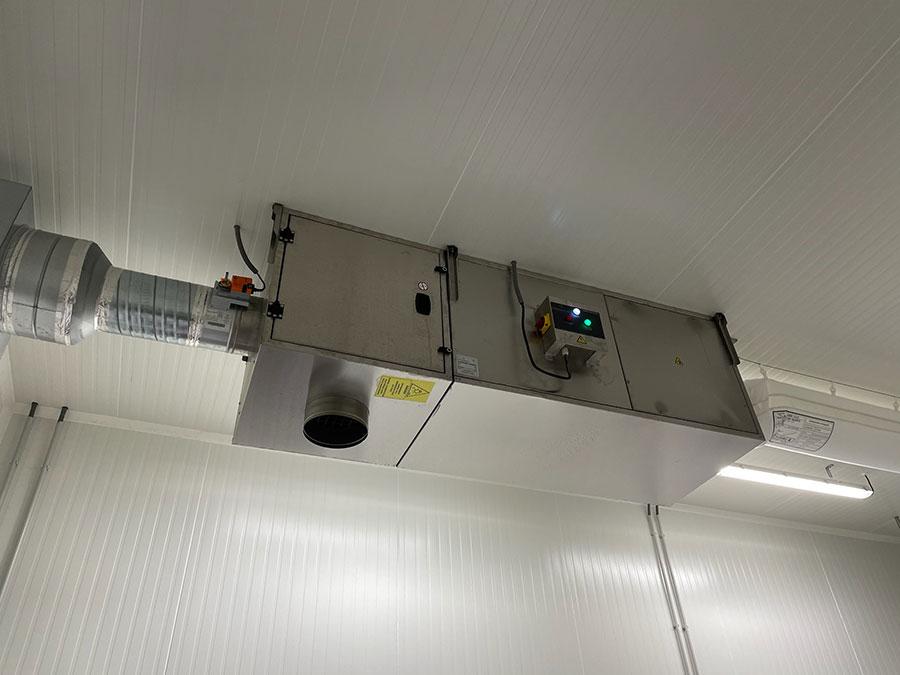
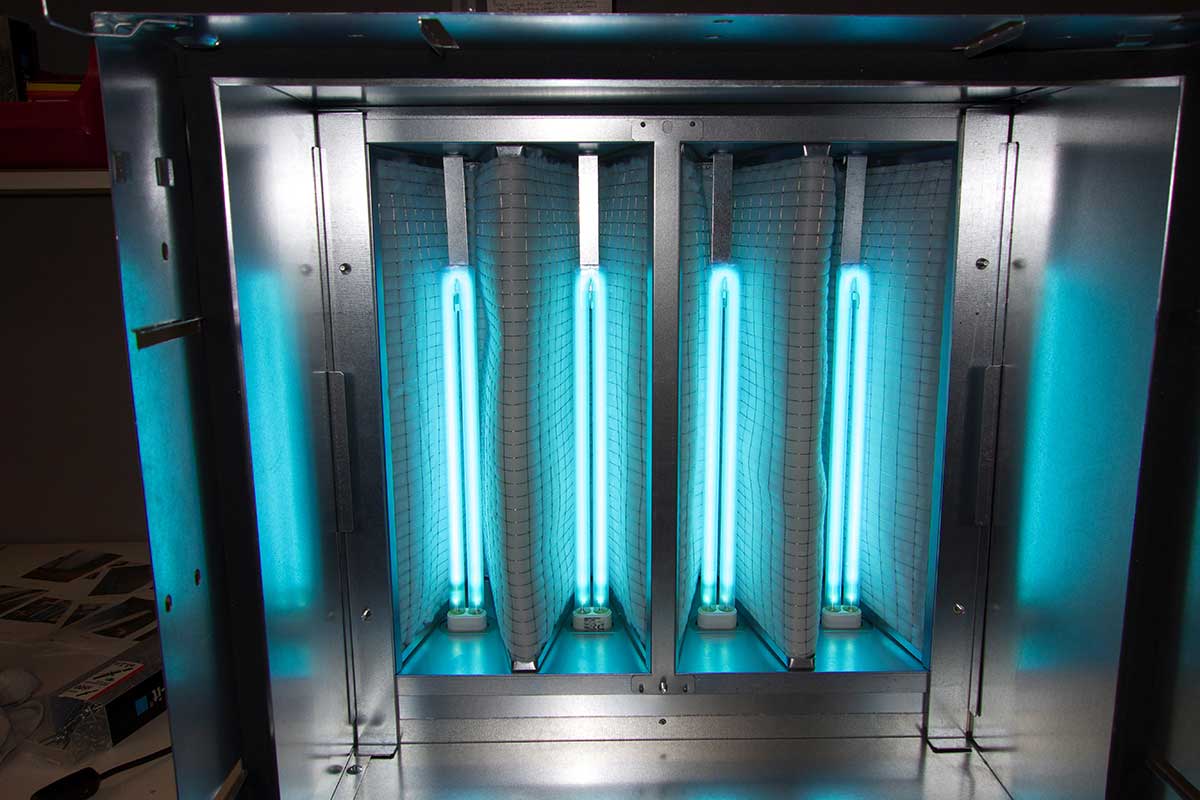
The Photoclean process has revolutionized the approach to air treatment in industrial facilities. Based on the microbicidal properties of UV-C rays, our solutions offer three key advantages:
- It is now possible to separate temperature and humidity control from contamination control.
- For the same volume, temperature and filtration requirements are drastically reduced.
- Air filtration systems are both more energy-efficient and more compact.
For industry professionals, this translates to lower costs and increased efficiency. Our modules continuously decontaminate very large volumes of air with a very low pressure drop
, without any temperature requirements, and with a reduced environmental impact.