

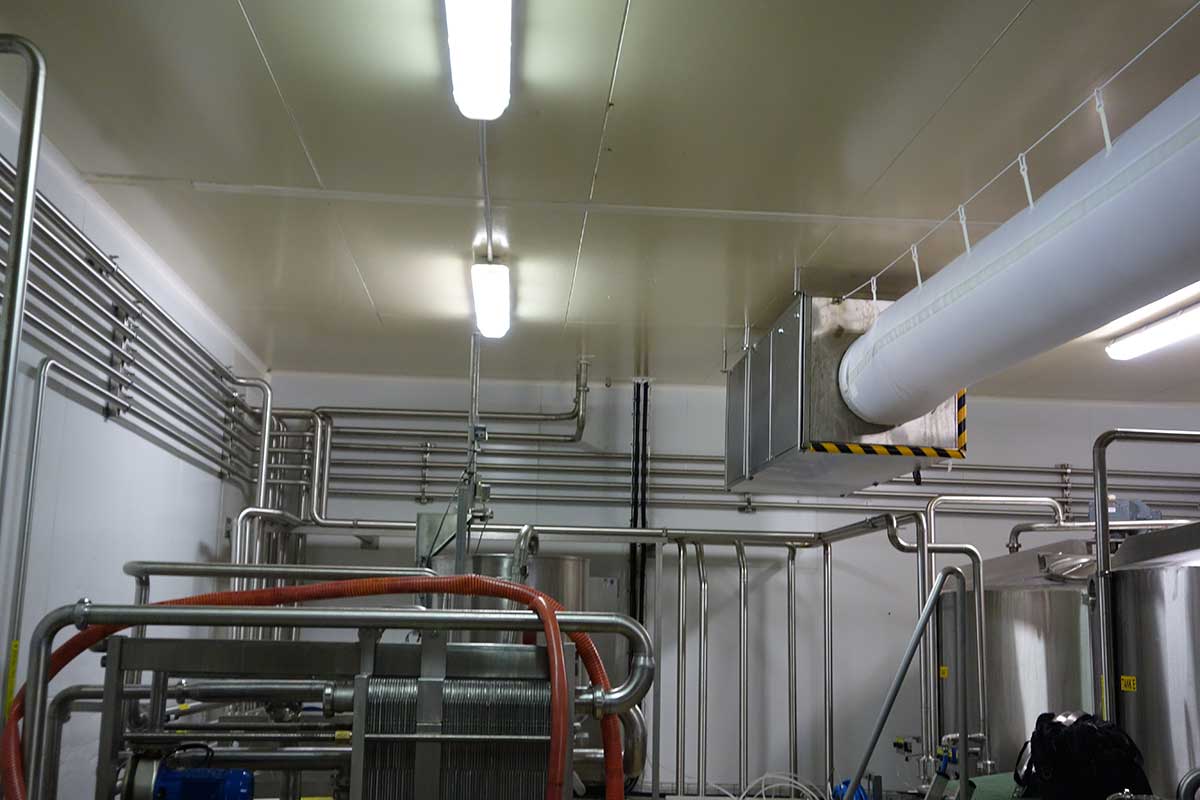
What is airborne disinfection?
Maintaining hygiene standards in sensitive industrial environments, such as cleanrooms or facilities in the food industry, requires cleaning and decontamination procedures. What is airborne disinfection? What role does it play in the industry’s quality process? PhotoClean, an expert in decontamination and disinfection solutions, provides the answers.
What is the role of airborne disinfection in industry?
Airborne disinfection, or DVA, is one of the most commonly used methods in industry. This technique complements traditional surface cleaning.
Airborne disinfection is a curative treatment generally applied outside of production hours. The products used are incompatible with human presence, as well as with the presence of sensitive products.
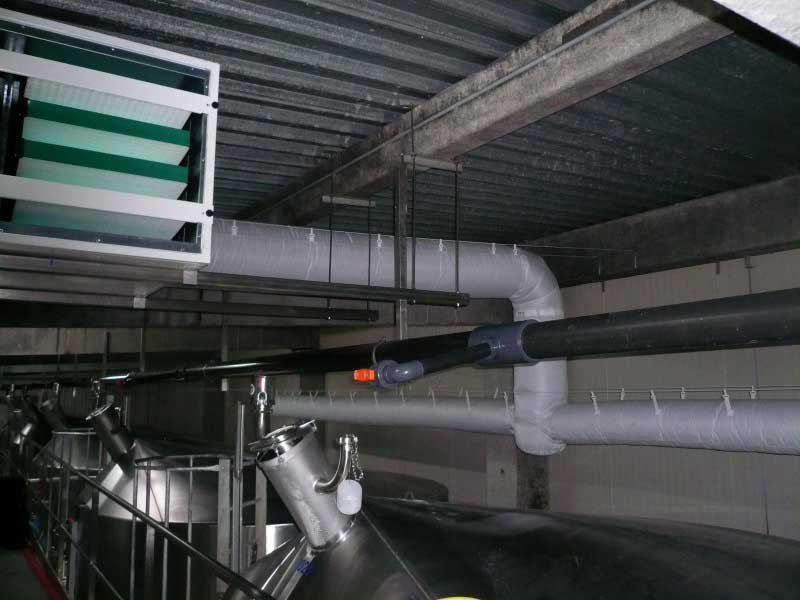
How does airborne decontamination work?
Airborne disinfection involves spraying a disinfectant into the air. The disinfectant settles on all surfaces in the room: floors, walls, machinery, work areas, etc.
This method of surface disinfection is carried out using three different approaches.
Misting involves spraying a disinfectant into the air in the form of very fine droplets through a nebulizer. This “mist” disinfects all surfaces exposed to the air without wetting them. This method is used in food industry facilities, hospitals, laboratories, and other settings.
Fumigation uses a biocidal gas, such as hydrogen peroxide (H₂O₂) or
glycolic acid, which is dispersed throughout the premises and is effective even in large volumes of air. However, the gas used is often toxic and must be completely eliminated before workers return. Its effectiveness depends on the accessibility of the surfaces and their porosity.
Automated vaporization systems (AVS) use various disinfectants to reduce the risk of contamination through nebulization or fumigation. These devices operate in four stages: preparation of the AVS and the room to be treated, introduction of the biocide, contact time, and removal of residues.
What are the advantages and limitations of the avalanche transceiver?
Airborne surface decontamination is an effective solution for preventing and controlling the presence of unwanted or pathogenic microorganisms. However, this technique has its limitations:
-
- No treatment of the ambient air (except during diffusion), but only of surfaces;
incompatibility with human presence;
- High cost of consumables (environmentally harmful products);
- risk of corrosion or damage to professional equipment;
- the need to remove products and clear out the premises.
What is an alternative to airborne disinfection in industrial settings?
But then, what solution should be adopted to combat contamination in industrial facilities? Photoclean offers a simple and effective answer: UV disinfection of the air.
The principle is as follows: UV-C rays have the unique ability to alter the molecular structure of living organisms, thereby destroying them. The only limitation stems from the short wavelength of these rays, which requires the air to be treated to pass as close as possible to the radiation source. Photoclean has therefore developed and manufactured an exclusive, patented medium that retains the air for the time necessary to decontaminate it.
The result is ideal: high-performance air treatment modules that are compact, energy-efficient, and adaptable to any installation.